Shakespeare is finally having his cultural moment.
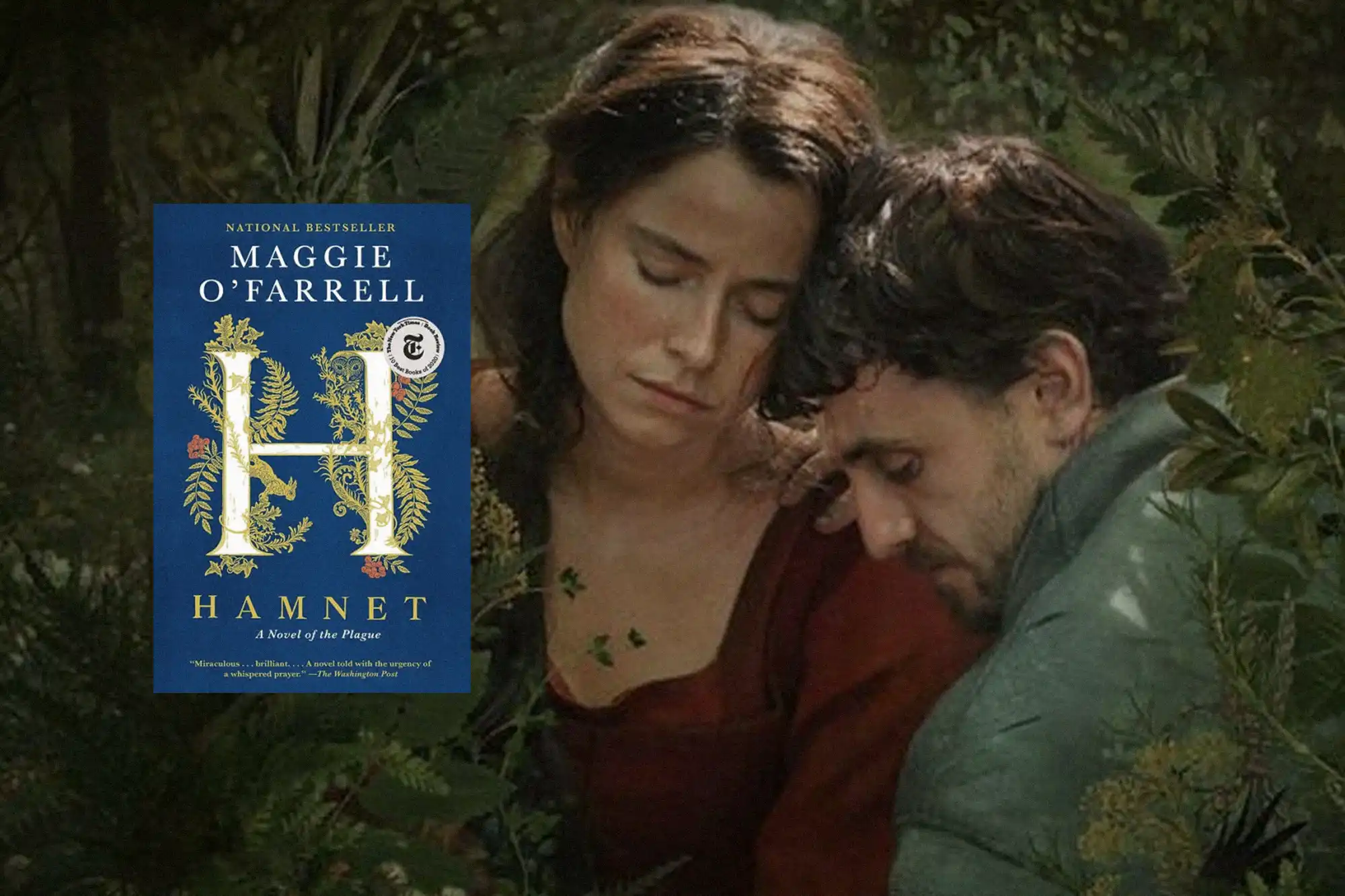
Chloé Zhao’s film Hamnet recently nabbed major awards at the Golden Globes and the BAFTAs, and with this year’s Academy Awards looming, we’ll soon see if the film’s critical acclaim carries through to its eight Oscar nominations. A leading contender for Best Picture, Hamnet is a film that is, at its core, about loss. Hailed as a glorious reimagining of literary history, Hamnet by Maggie O’Farrell—the novel that inspired the film—explores the emotional world surrounding William Shakespeare’s family with stunning sensitivity.
A poignant and lyrical antidote to the inescapable human experience of losing someone you love, both the novel and the film succeed because they recognize the power that art can have to bring light into the darkest moments of life. The fictional story orbits around the presence and subsequent absence of young Hamnet, giving readers and audiences a way to sit with death, to feel its weight, and to see grief more clearly. This standout film has left audiences enthralled and crying as the credits roll because it doesn’t shy away from depicting grief in its raw, unadulterated state. By offering a window into Shakespeare’s personal life and by turning the spotlight on Agnes, Shakespeare’s wife, readers see a different side of the cultural behemoth that they know the playwright to be.
The Bard Demystified
In her novel, Maggie O’Farrell imagines the contours of a life in between very few definite facts about Shakespeare’s life in Stratford-upon-Avon. In the 1580s, William Shakespeare and his wife Anne Hathaway (Agnes in the novel/film) had three children: the eldest, Susanna, and a pair of twins, Judith and Hamnet. In 1596, Hamnet died at age 11. About four years later, the play Hamlet premiered in London.
When O’Farrell embarked on writing Hamnet, she speculated how this child’s untimely passing might have been the catalyst for one of Shakespeare’s greatest tragedies. “I knew that it was significant,” O’Farrell said in an interview with CBC. “I knew that the very act of Shakespeare calling this play, and the character, and the ghost—let’s not forget—after his son, the same name as his son, was an enormously significant act, and I couldn't understand it and I wanted to understand it.” Notably, the spelling “Hamlet” was often used interchangeably in historical records with Hamnet. A simple idea, O’Farrell took it and ran with it.
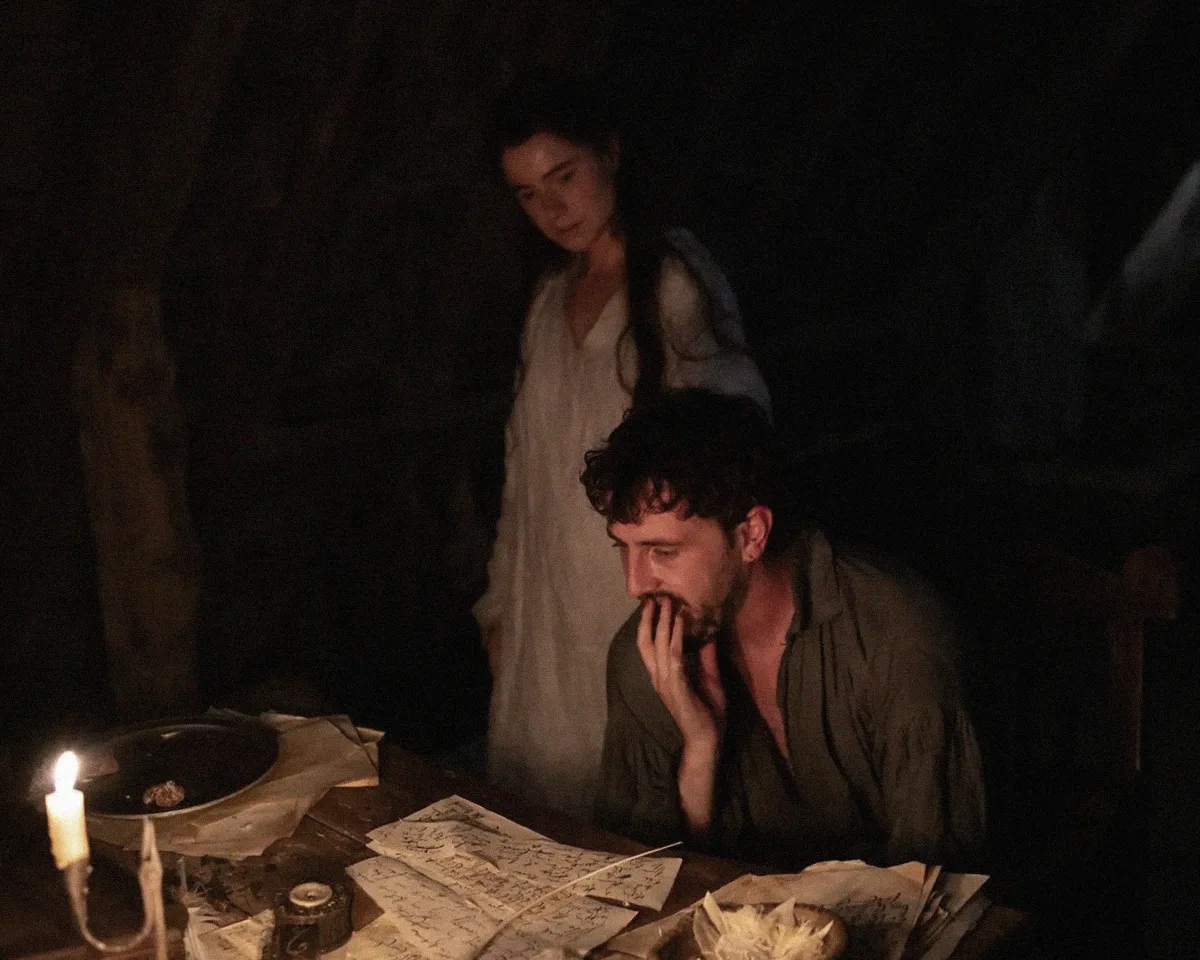
The writer also detaches us from what we think we know about Shakespeare, humanizing him in the process. Deliberately, she never refers to the playwright, only calling him by the roles he plays: “the poet,” “the tutor,” “father” or “husband.” In an interview with NPR, the author explained, “His name carries so much heft… I needed people in a sense to forget who he is.”
In tracing the gaps in Shakespeare’s biography, O’Farrell also invites us to reconsider what his plays are really doing with love, loss, and memory. With its depiction of grief, both the film and the novel lay bare the stakes of love. Is love worth grief’s searing pain, how it dulls the senses, and the way time seems to throb with new urgency?
In the book, the depth of one’s love is turned inside out, as both Agnes and the audience search in the deepest parts of themselves to find someone who was here one minute and gone the next. “How can he live without her?” O’Farrell writes of Hamnet and his twin sister. “He cannot. It is like asking the heart to live without the lungs, like tearing the moon out of the sky and asking the stars to do its work, like expecting the barley to grow without rain.”
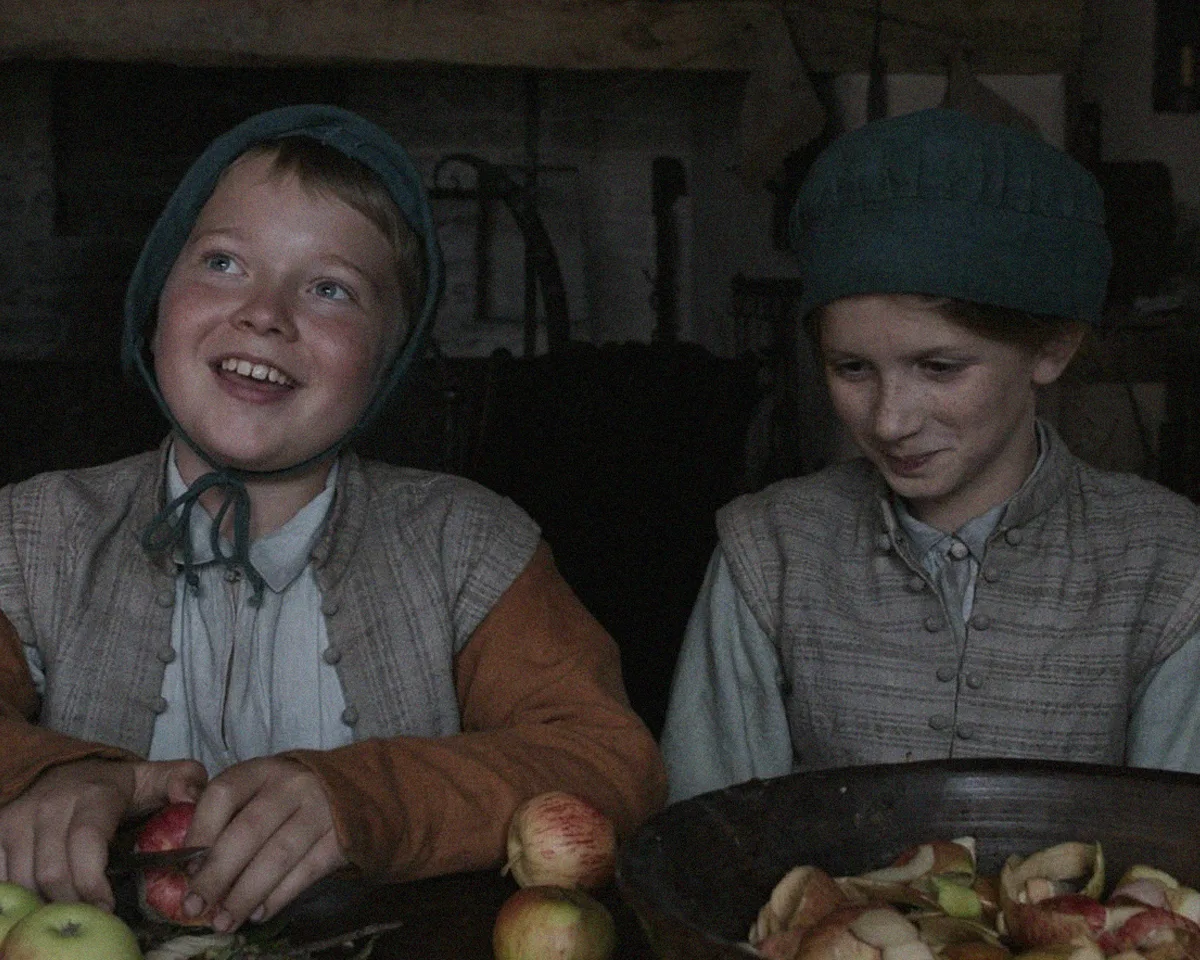
When the plague strikes, it is Judith who the disease almost claims. Hamnet switches places with her and relinquishes his life for his sister, so the disease clings to his body instead. This heart-wrenching relationship also puts two of Shakespeare’s twin-centered plays, Twelfth Night and The Comedy of Errors, into much sharper focus. Particularly when Viola, in Twelfth Night, looks at her reflection in the mirror and, for a moment, believes it is her twin brother, “living in my glass” (Act 3, Scene 4), who she thinks is dead at sea. Or when Antipholus of Syracuse in The Comedy of Errors, searches for his twin, and soliloquizes, “I to the world am like a drop of water / That in the ocean seeks another drop” (Act 1, Scene 2).
Maggie O’Farrell’s novel avows that Hamnet is more than a footnote in Shakespeare’s biography. The author believes that without Hamnet’s death, Shakespeare may never have written Twelfth Night. Perhaps, in these narratives of twins finding each other, Shakespeare is continuing to pull on the threads of loss, teasing them out as grief, absence, and separation continue to appear.
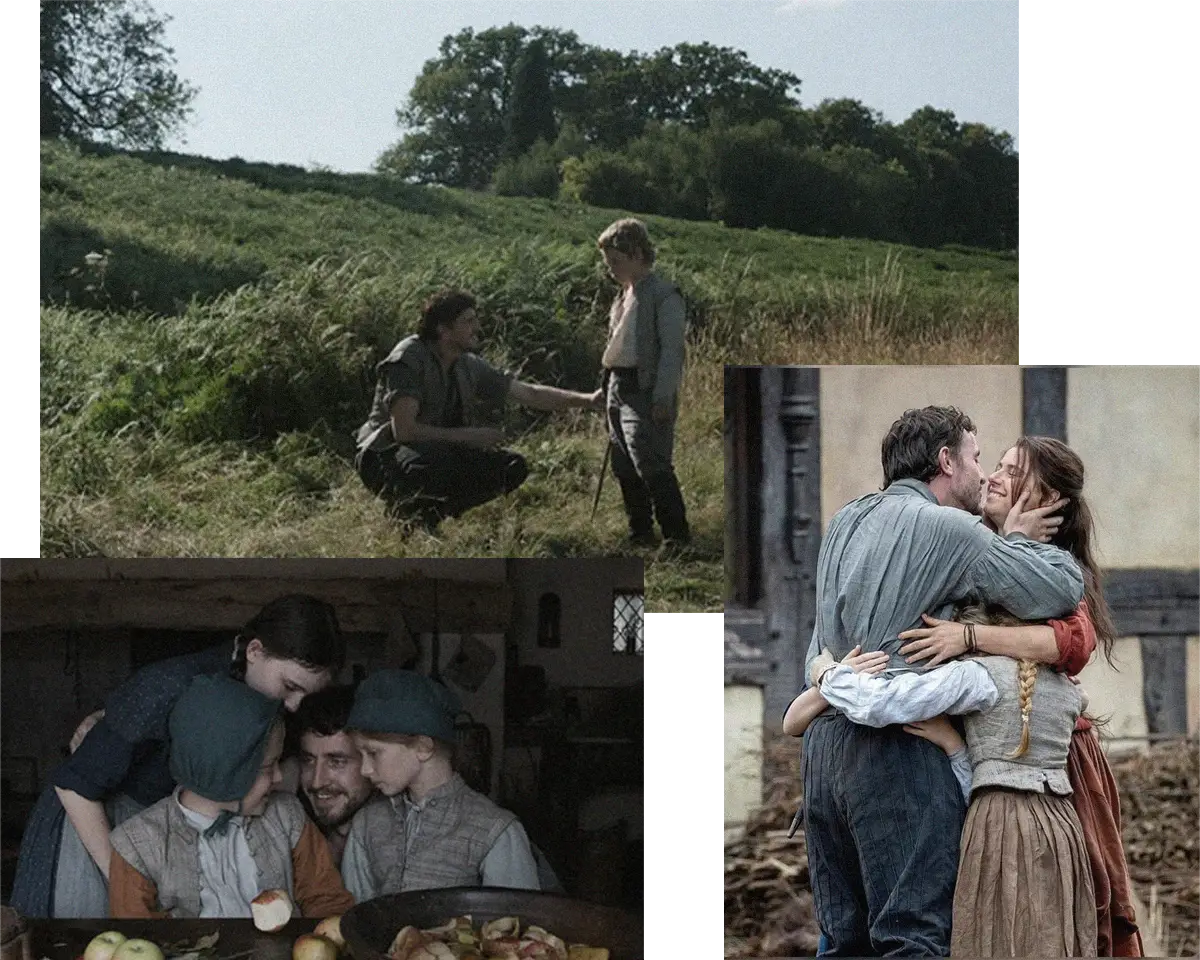
Co-writing the script, Zhao and O’Farrell partnered in a way that allows both their talents to shine; the film is able to convey the poetic atmosphere, staying true to the novel’s emotional depth. Watching the film is a tactile experience—think peeling of eggshells, flood waters staining wooden floorboards, buzzing of bees, and dirt caked under Agnes’s fingernails as she plants herbs of mugwort and rosemary. These intricate details easily transport modern viewers to a 16th-century life.
Art as Catharsis and Healing
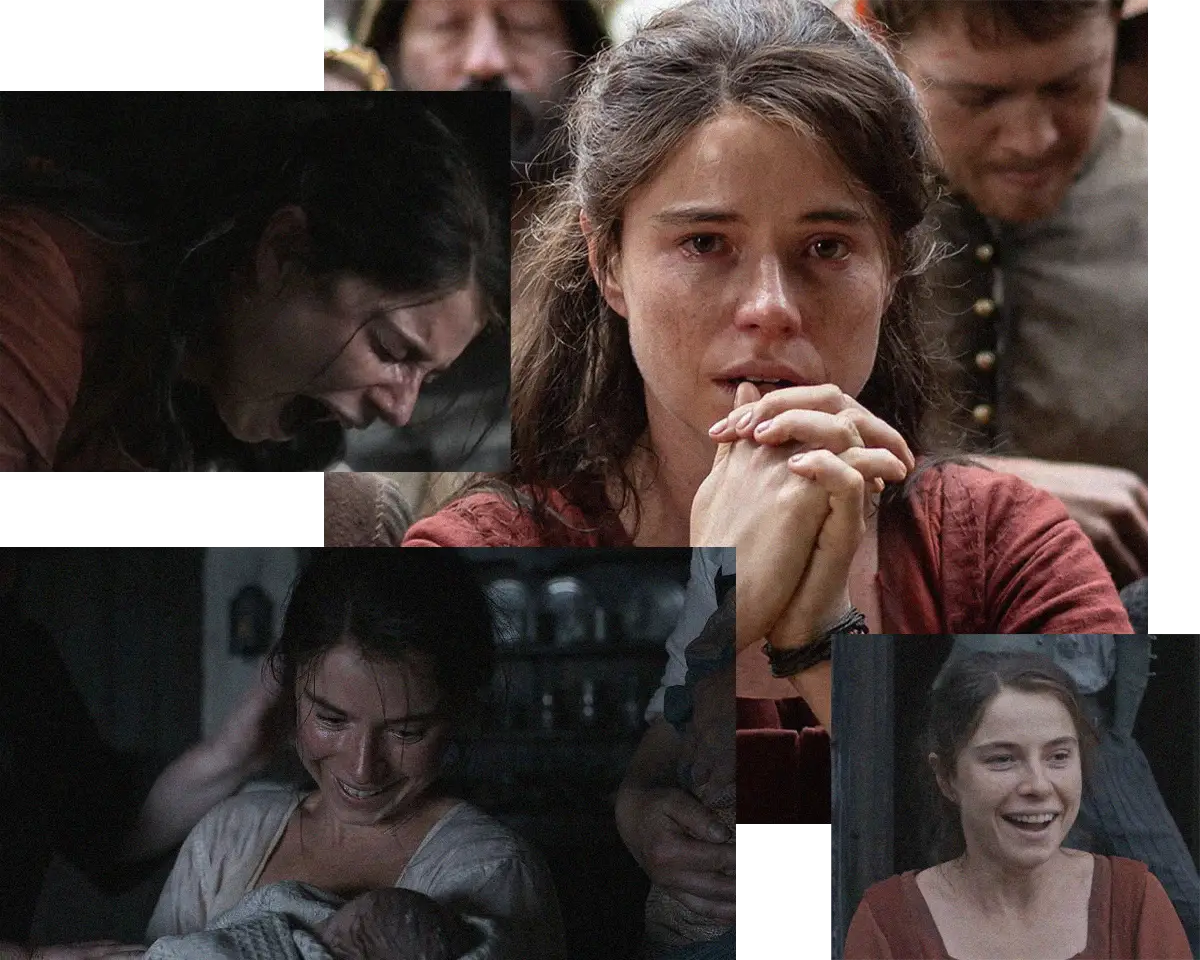
And then there’s the casting and acting. Actress Jessie Buckley’s portrayal of Agnes’ anguish is unlike anything viewers have seen this year. “Stories help us transcend the things that we don’t know how to let out of ourselves,” she said for Elle, capturing that ethos in her performance alongside Paul Mescal. Storytelling is a spiritual and emotional language through which they first fall in love, and how they find each other again once their marriage becomes strained after Hamnet’s death.
Nowhere is the film’s emotional power clearer than in the way it uses storytelling itself to bind Agnes and Will together. In a verdant, sun-soaked forest, Agnes asks the young Latin tutor to tell her a story—a new scene added to O’Farrell’s original text. “Something that moves you,” she says to Will. He reaches for a classical Greek myth, Orpheus and Eurydice. Orpheus’s enchanting music convinces Hades to give his wife, Euridice, back her life. At the last moment, she vanishes before they reach the land of the living because Orpheus disobeyed the god’s command not to look back at Eurydice. “The rest is silence,” Will concludes—the same line that will become Hamlet’s final words before he dies in the play.
Throughout the rest of the film, this myth becomes an invisible touchstone for Agnes. She calls to Will, “Look at me,” first at their wedding, as if to say that their love can defy death, and again when she witnesses Hamlet on stage for the first time. In that moment at the Globe, when Agnes watches her husband and says “Look at me,” it is her way of telling him that she understands—that she sees him fully in his grief.
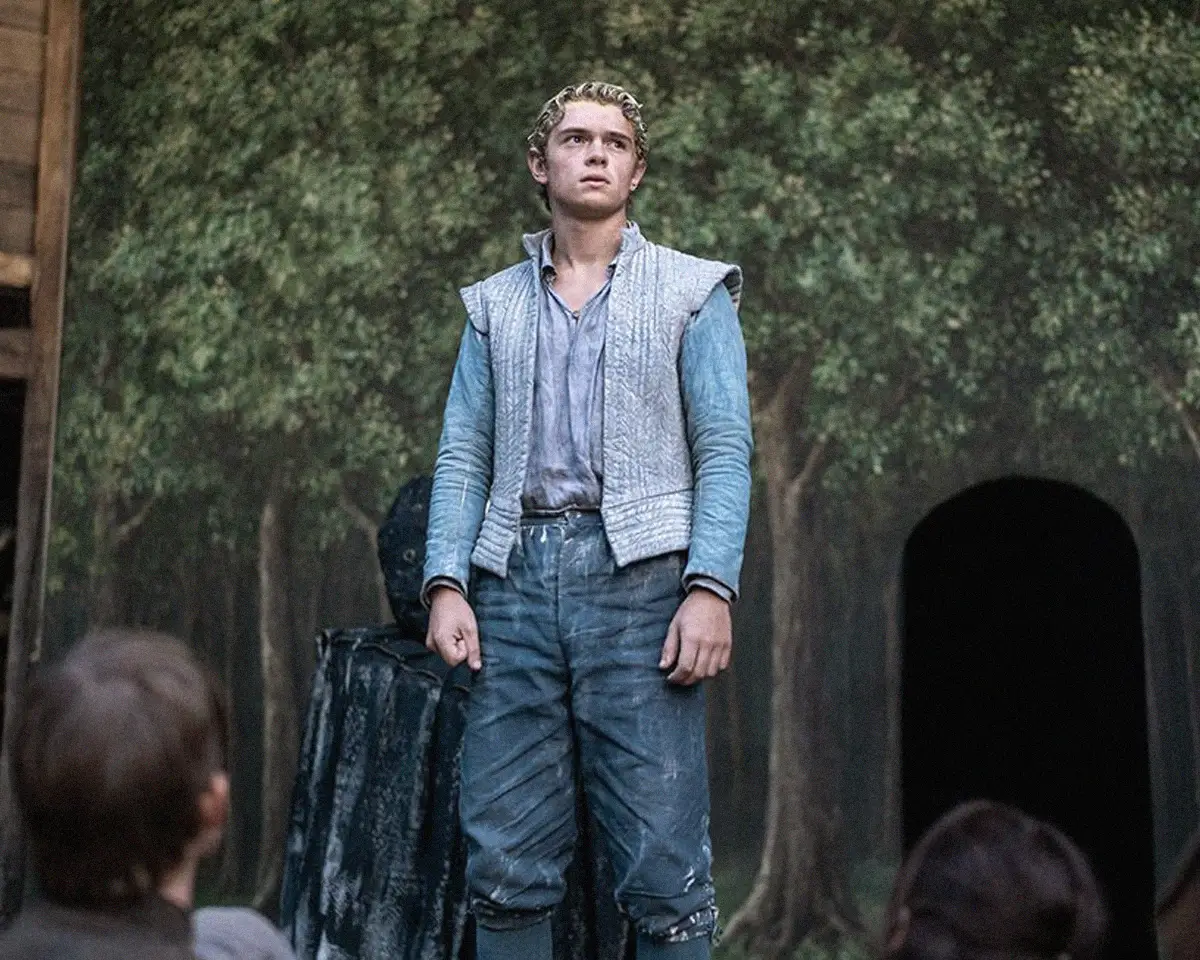
In the film, when Prince Hamlet appears onstage, in the same sky-blue colored doublet and flaxen hair as his younger counterpart, we see a version of the boy who would have grown up to be an actor in London with his father. Agnes witnesses her Hamnet reborn, brought back to life, in the character of Hamlet. The play transfixes her, offering a way to sit with and begin to transform her grief. O’Farrell first imagined this confrontation between Agnes and Hamlet on the page, and the film carries that idea to its fullest expression on screen. She smiles and lets out a laugh when she realizes what her husband has done, immortalizing their child forever in these words, dissolving the veil between life and fiction.
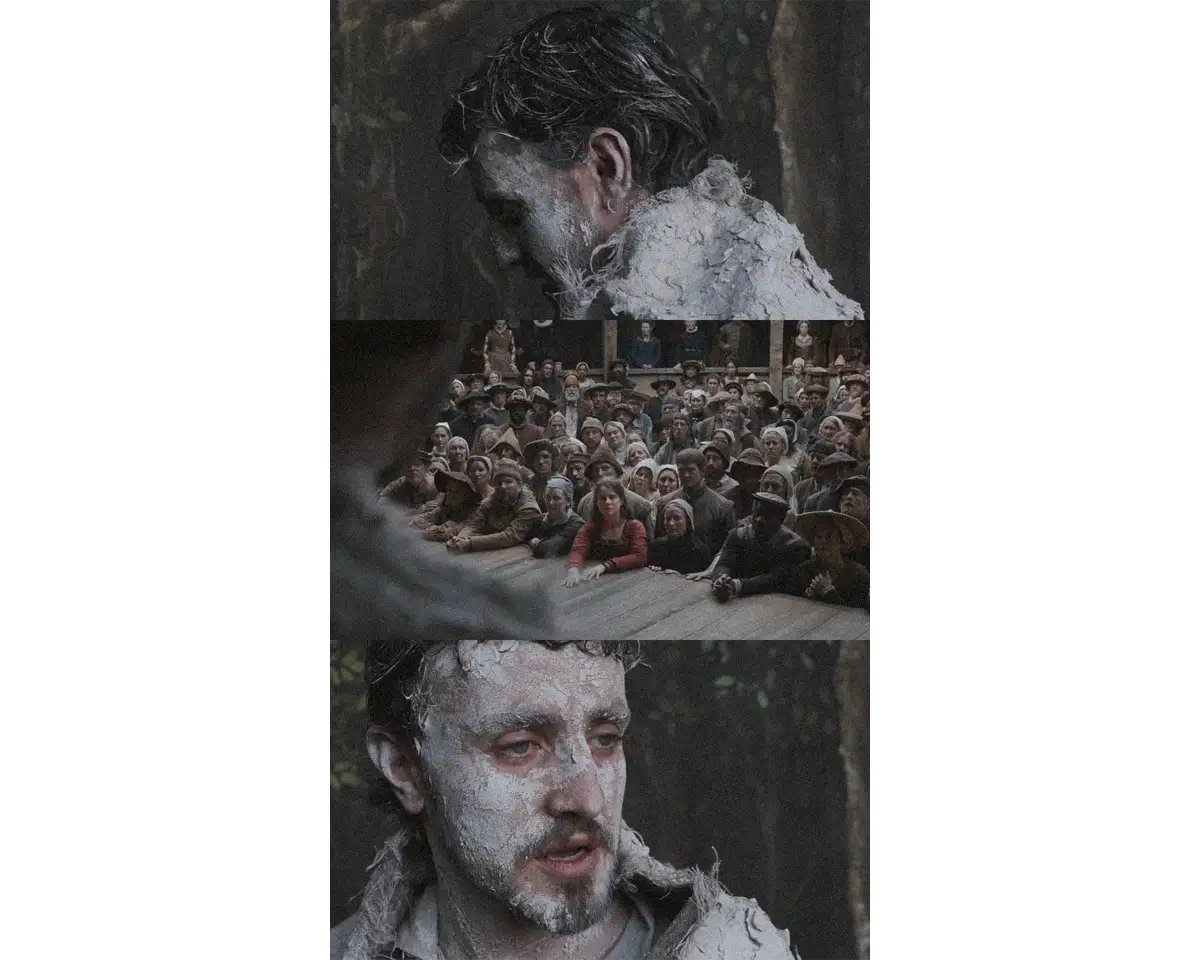
Theater is also a space where Will processes his grief, a form of catharsis and a way to make meaning of an impossible reality. In choosing to name both the king and prince Hamlet, and by playing the part of the king’s ghost, Will keeps Hamnet alive and takes on the boy’s death on his own. Maggie O’Farrell wrote it best: “He has put himself in death’s clutches, resurrecting the boy in his place… He has, Agnes sees, done what any father would wish to do, to exchange his child’s suffering for his own, to take his place, to offer himself up in his child’s stead so that the boy might live.” Agnes finds her son in both the ghost of the murdered king and the young prince who plans to avenge his father. By channeling love and grief into art, both Hamnet and Hamlet offer a way forward, a way to keep on living.
Hamnet plunges its audience—like Orpheus—into the underworld, to wade through the depths of grief, offering a way to bring our loved ones with us as we trek home. We can only hope that they may follow us there, into daylight.