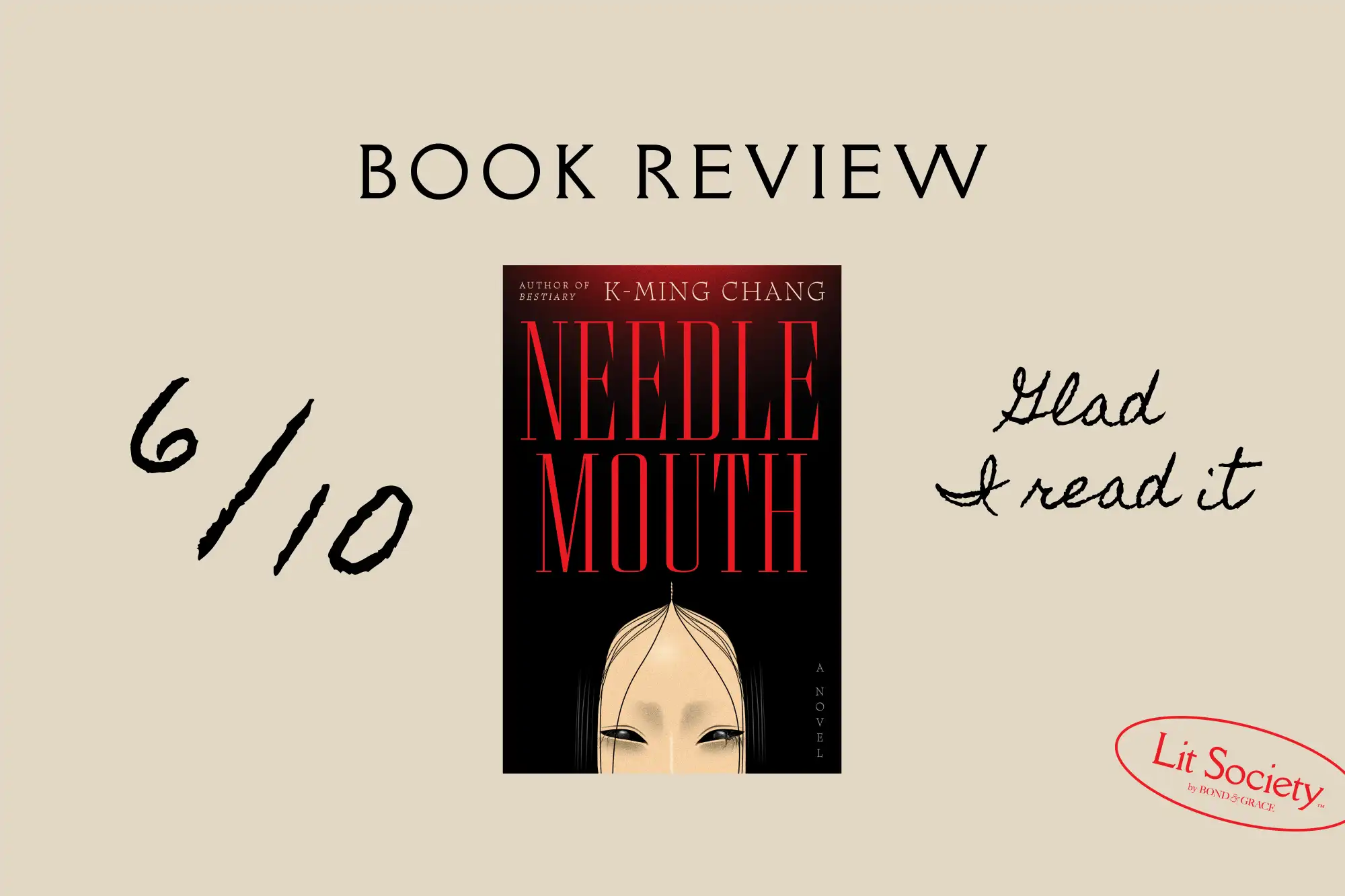
As part of Lit Society’s Book Review Program, members are reading and reviewing books by independent writers we think deserve more attention. This review reflects one reader’s honest experience and aims to spotlight exciting new voices.
Big Take? Needlemouth is hungry and three young cousins may just be the only ones who can help satisfy her hunger. For those interested in body horror, female rage, and the monstrous, this one is for you.
- Would You Recommend It? Yes
- Book Club Worthy? Yes
- Would You Read This Author Again? Yes
- Did It Change How You See Something? No
- Is It More Plot or Ideas? Ideas
- Pace: Slow
- Emotional Impact: Lingering, with many questions raised about generational trauma and what it means to be a woman
- Best For: Readers who are interested in exploring the idea of female rage and those okay with body horror
- Skimmable or Demands Attention? Close reading to decipher the supernatural elements and what is real
- Would You Reread It? No
With a vampiric demon, a nightmarish setting, and a dark quest, Needlemouth employs many elements of classic horror, using a feminist lens to explore female rage, generational trauma and mother and daughter relationships.
Cousins Cindy, Mandy, and Yangyang spend the summer in their dead grandmother’s house. The girls are united not only by family ties but also as daughters of unhappy women tethered to men for whom they have sacrificed their own desires.
By day, they play house with their neighbor and try to enjoy the summer, but by night something sinister is afoot. Cindy wakes “every morning with [her] mouth broken into,” and discovers a cat claw, a coin, or a toxic berry inside it. One night Cindy wakes not to another object, but to a creature with a needle for a mouth - Needlemouth.
Needlemouth is hungry for blood of her descendants, but has none of her own. She seeks out Cindy to establish a lineage of her own, and, perhaps more importantly, to sate her hunger so she will “at last be full.” Cindy consents, but Needlemouth has one more demand. To truly end her suffering, the girls must kill her father, and no one will be free until the task is done. They embark on a journey to fulfill this demand and uncover who Needlemouth is and how their stories are linked.
Needlemouth’s appearance in the girls’ lives helps them understand their circumstances and how to break free. They have all grown up in a cycle of misogyny and violence, feeling trapped by the circumstances handed down to them. Their mothers are depicted as women who surrender to male figures in their lives, wondering, “is it worse to die or to accept your life?” This acceptance traps them in a never-ending cycle. While the older generations are said to have chosen this surrender (though I do wonder how much of a choice it really was), the girls desire to choose differently. Needlemouth’s task and her treatment of them enrages the girls, but it also gives them an opportunity to channel their rage into action—or more specifically, destruction—in an attempt to change their circumstances.
This novel certainly tackles big themes, none necessarily novel or unexplored in literature, but all important nonetheless, especially in today’s society. However, the execution and development of these themes within its otherworldly setting slightly missed the mark for me. While the supernatural elements initially drew me in, I felt they obscured what was at the heart of the novel: how to break free from generational trauma and how rage can be turned into action.
The prose, while lyrical, sometimes veered into abstraction. Though the style fit the supernatural setting, it made it hard to distinguish between reality and the dreams or nightmares Needlemouth created. It also made me question what the girls were actually thinking, and what might have been planted in their minds by Needlemouth. Some more straightforward passages might have clarified the girls’ inner lives and brought the novel’s central concerns into sharper focus.
Needlemouth’s control over the girls’ thoughts and bodies, along with the explicit descriptions of bodily fluids, felt more geared toward shock factor and less to propel the plot or develop the characters and themes. Overall, the supernatural element created a place for the girls to understand and assert their rage but also veiled what I believe the author was ultimately trying to explore.
Needlemouth left me with a lot more questions than answers. Can women only use their rage in an otherworldly place? Is there a place for it in our world? Is destruction the only way to break free from cycles of misogyny and violence against women? Does choosing to break free make you a monster?
I don’t expect a novel to give me all the answers, certainly not to questions as big as these. I do wish it had pushed beyond its horror and supernatural elements to explore these questions more deeply. Still, Needlemouth definitely got me thinking, and that, in my opinion, is what a worthwhile reading experience is all about.
Favorite Lines?
“It’s hard to be a girl in a family where no woman has ever been happy.”
“I am learning that choice is a terrible thing. What a horror to choose between leaving and staying, running from the monster or becoming it, carrying the stories in silence or butchering them for an audience. To forgive or to avenge. To end my line. To be the first of it. A choice is never fair; it is the fruit of accumulated futility, lifetimes of bittering.”
"I once believed that carrying your suffering was the greatest way I could love you; now I understand I was only complacent, only preserving your suffering. Destruction is the most futuristic form of my love.”
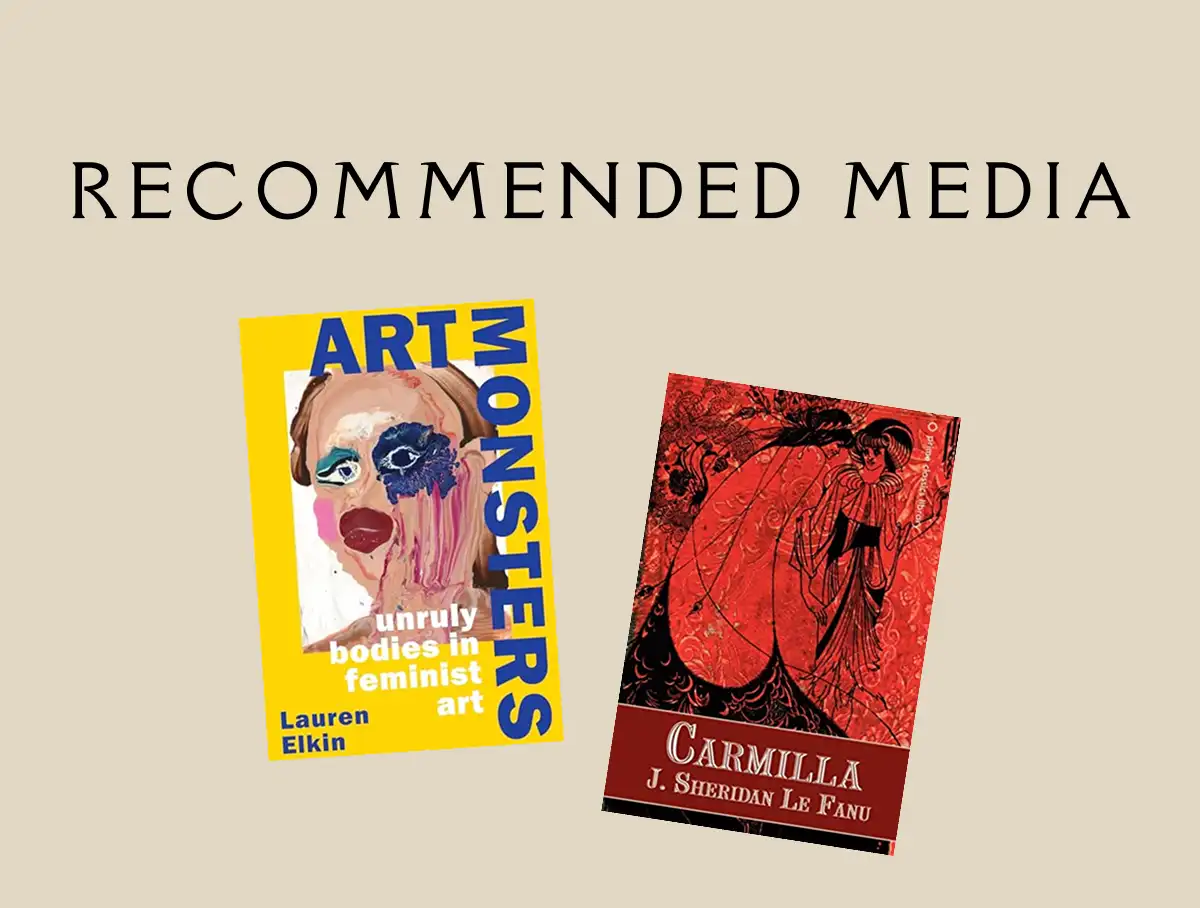
Recommended Media?
📚 Art Monsters: Unruly Bodies in Feminist Art by Lauren Elkin (2023)
📚 Carmilla by Sheridan Le Fanu (1872)
Interested in purchasing Needlemouth? Support Bond & Grace and purchase the book via Bookshop here.