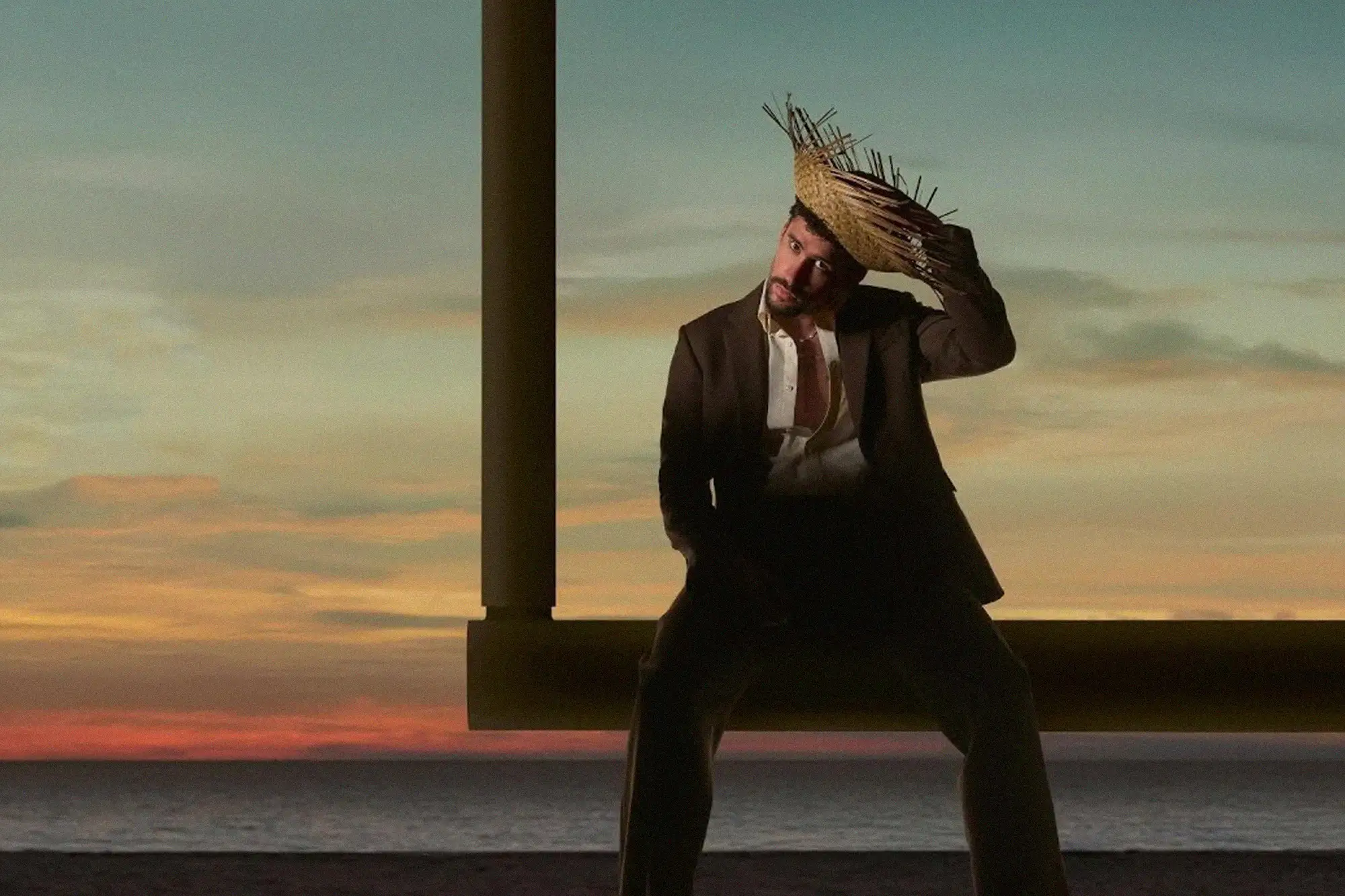
Super Bowl LX is bearing down. Despite everything, Bad Bunny, the proud Puerto Rican global superstar is about to grace our screens. He’s modern reggaeton and Latin trap, unafraid to cover both pleasure and politics in music. I have to think the kids will be alright if we have an artist like him this year. His natural Puerto Rican accent, bilingual wit, and unapologetic stances are exactly what scares many and excites the rest of us about the future. Upon accepting his historic Grammy win, he spoke out: "We’re not savages, we’re not animals, we’re not aliens – we’re humans and we are Americans.” More than just a musician, Bad Bunny has become a walking symbol of the controversy of our times—and now, he’s stepping onto the global stage.
But it took a targeted push from Jay-Z’s Roc Nation to get a figure like Bad Bunny in front of 127 million eyeballs—long gone are the tamer days of Pepsi-sponsored shows. As the halftime show’s sponsor from 2013–2022, Pepsi’s glossy pop spectacles are a thing of the past. No longer the culture-setting brand they used to be, we said goodbye to Pepsi and hello to Apple Music in partnership with Jay-Z’s Roc Nation. Roc Nation stepped in in 2019 as the NFL’s live music strategist, bringing sharper, artist-driven acts to the halftime stage, which did more for America than many of us are ready to credit. Sports, the arts, and politics are always going to communicate, but Roc Nation has forced a more explicit conversation between these three integral components of culture.
For Bad Bunny, the pressure is on; each year, the Super Bowl puts one artist under immense scrutiny, and Roc Nation has chosen to spotlight a divisive figure whose political perspective is inseparable from his persona. To understand Bad Bunny’s Super Bowl moment, let's trace the halftime evolution—from Kaepernick's kneeling causing a cultural crashout, Black Lives Matter pressure, and Roc Nation's 2019 power play. It took backlash, boycotts, and a collision of musicians and politicians, to arrive at today's melting pot of music, cultural commentary, and identity on sports’ biggest stage.
Setting the stage: When Beyoncé and Kaepernick Broke the NFL
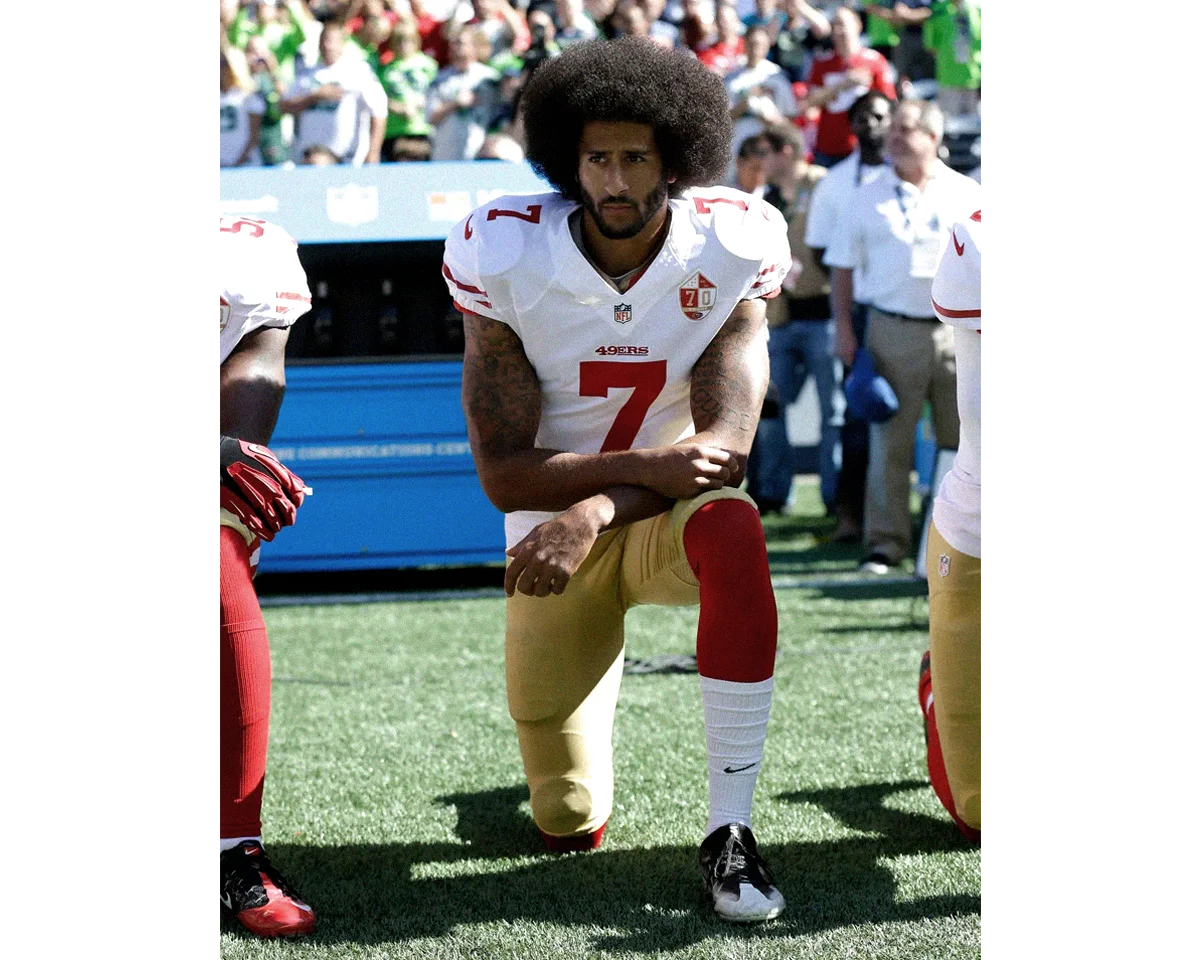
Before the NFL had any official diversity programs, Colin Kaepernick forced America to confront police brutality. In 2016, the player began protesting by kneeling during the national anthem in pre-season—a moment etched into American memory. Soon after, he opted out of the last year of his contract. Then came the Super Bowl.
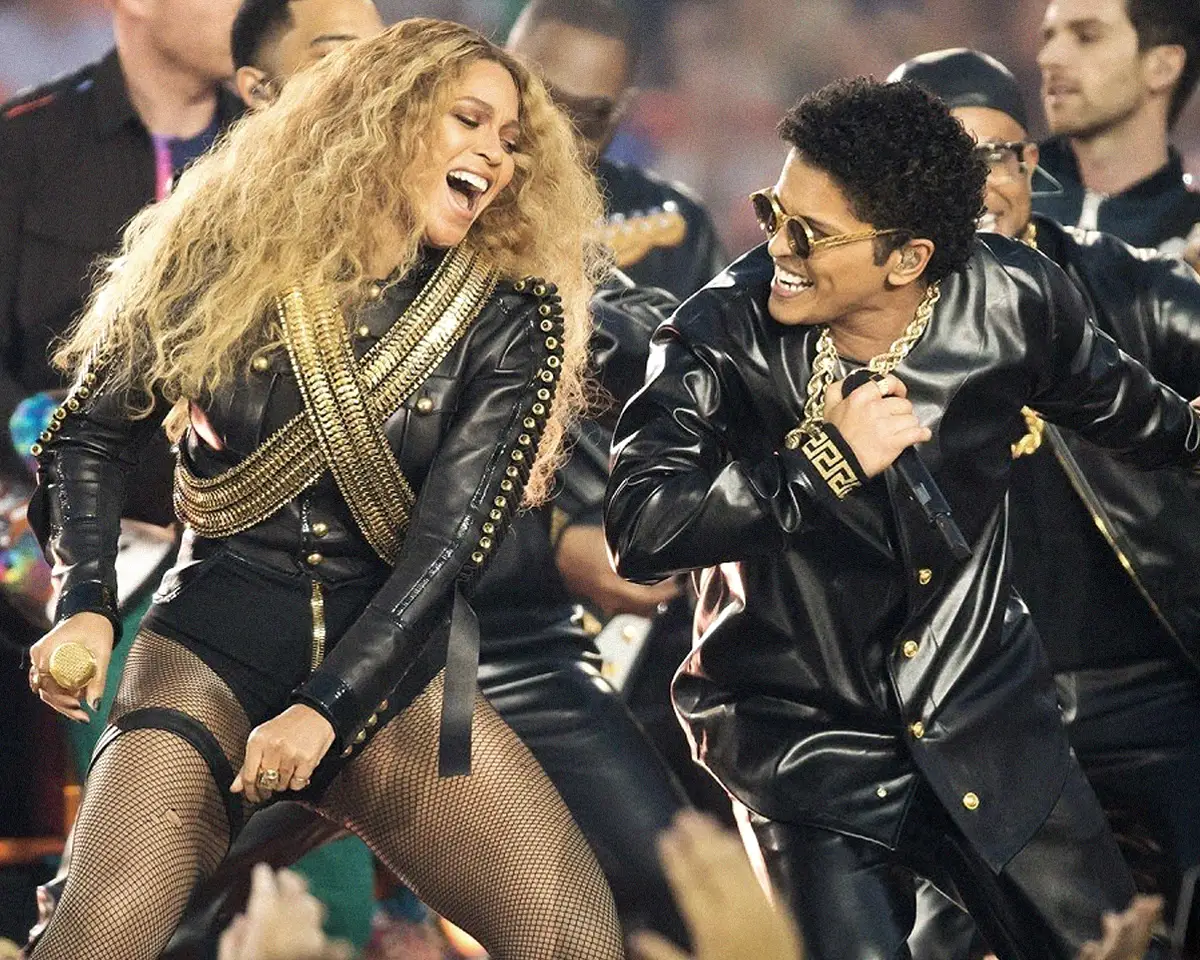
Coldplay was billed as Super Bowl LI’s headliner, but Bruno Mars and Beyoncé stole the show. The duo took the stage in what was described at the time as a throwback to Run DMC or even Michael Jackson’s “iconic looks”—the racial implications were hard to ignore. Independent outlets clocked what they called Beyoncé’s Black Panther–esque look, connecting her outfit to broader conversations about the racial reckoning simmering off screen. While Blackness was being punished on the field and on American streets, Bruno Mars and Beyoncé boldly put identity politics on the national stage. Incapable of addressing the real message of their halftime show head-on, the NFL tried to dilute and redirect the BLM messaging but failed spectacularly. It was a PR nightmare for the league that now looked out of touch and out of control.
In early 2019, a year before George Floyd’s murder, the NFL launched the Inspire Change iniative—a branded platform highlighting existing charity work by players, teams, and the league office. Repackaged as a unified social justice initiative, it spotlights four pillars: education, community and police relations, economic advancement, and criminal justice reform. All issues that disproportionately impact Black and brown bodies in the US. Inspire Change also had serious pull when it came to the Super Bowl’s performer selections. The rollout was clunky, but the new rules were clear: sports, arts, culture, and politics wouldn’t, and shouldn’t be at odds on the nation’s most visible stage.
Let’s Run It Back
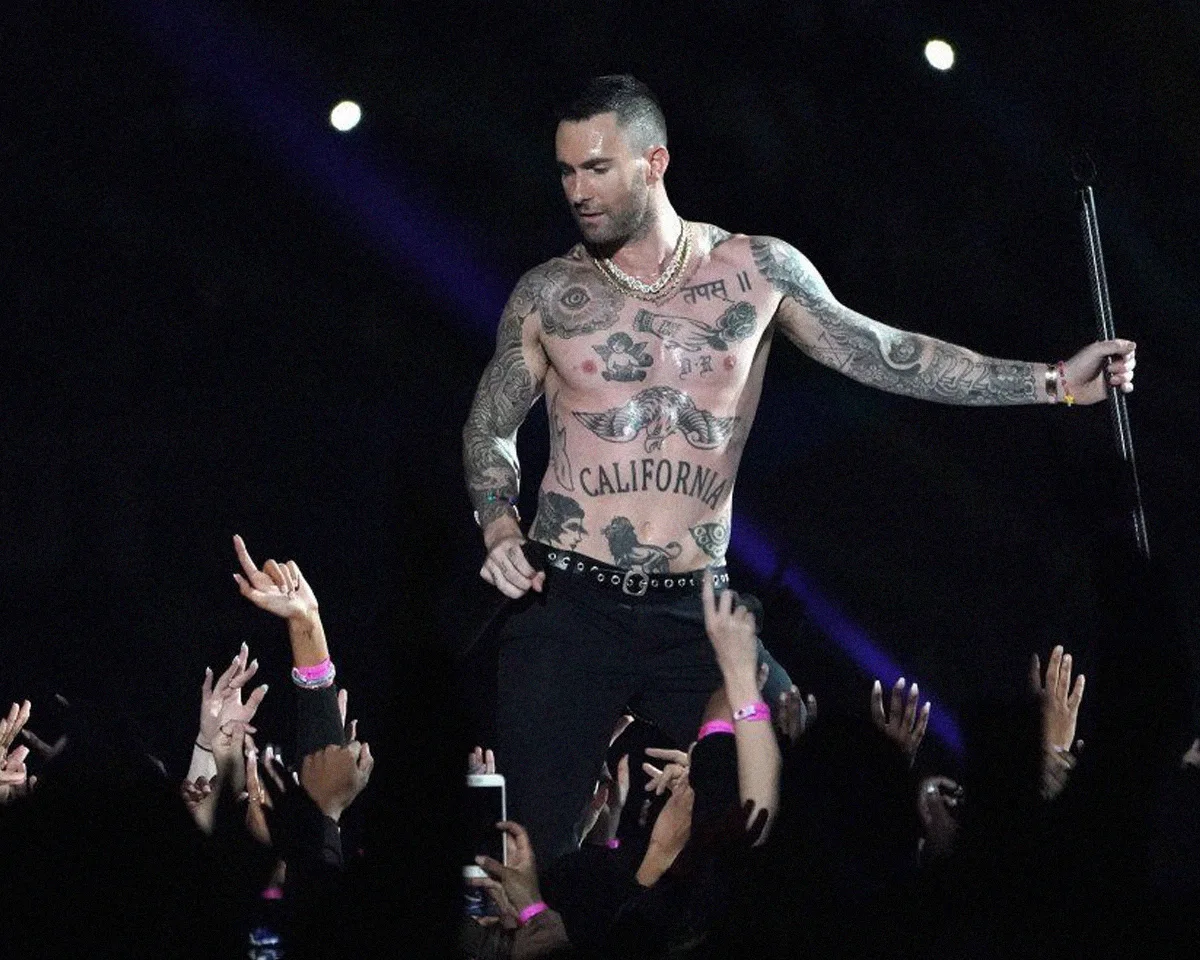
2019: Maroon 5, Travis Scott, Big Boi
This year marked the last of the pre-Kaepernick settlement shows and came before Inspire Change. It was a pretty hollow performance save for the marching band and a Spongebob tribute. No story, no overall theme. It wasn’t bankable, and there was hardly any after-market appeal—an enormous miss for the machine that is the Halftime Show. (We should also note, Rhianna, Jay-Z, Cardi-B, and P!nk declined to headline in solidarity with Colin Kaepernick. Nicki Minaj declined to feature with Maroon 5.)
Net Positive: Adam Levine and the Super Bowl did donate some $500,000 to Big Brothers and Big Sisters prior to the show… but only after Travis Scott negotiated for a $500,000 joint donation match from the NFL to Dream Corps.
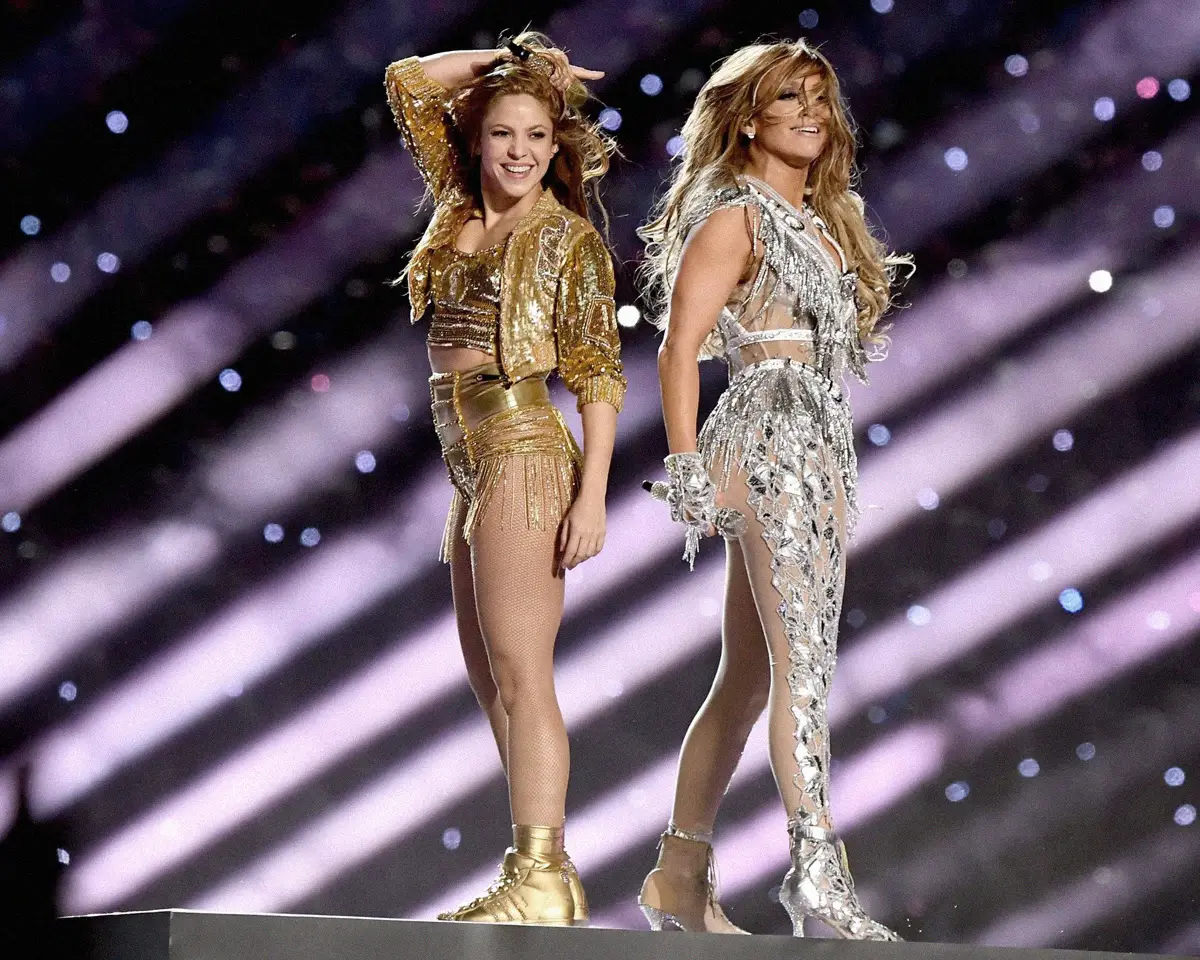
2020: Shakira, Jennifer Lopez, Bad Bunny, J Balvin, Emme Muniz
Bringing back more movement and life, it’s hard to imagine this show in a bigger form. Brown artists performed in Spanglish, playing to the home crowd in Miami reminiscent of Carnival. Even so, there were two headliners with wildly different vibes. I’m not taking sides, but you need to check out J-Lo’s documentary Jennifer Lopez: Halftime, if only to get a look at the preparation behind the Super Bowl.
Net Positive: Turns out, you can't just book similar skin tones and competitors on the same stage and expect them to not only mesh, but play nice. Maybe that’s why the next year’s artists had more input on their collaborators…
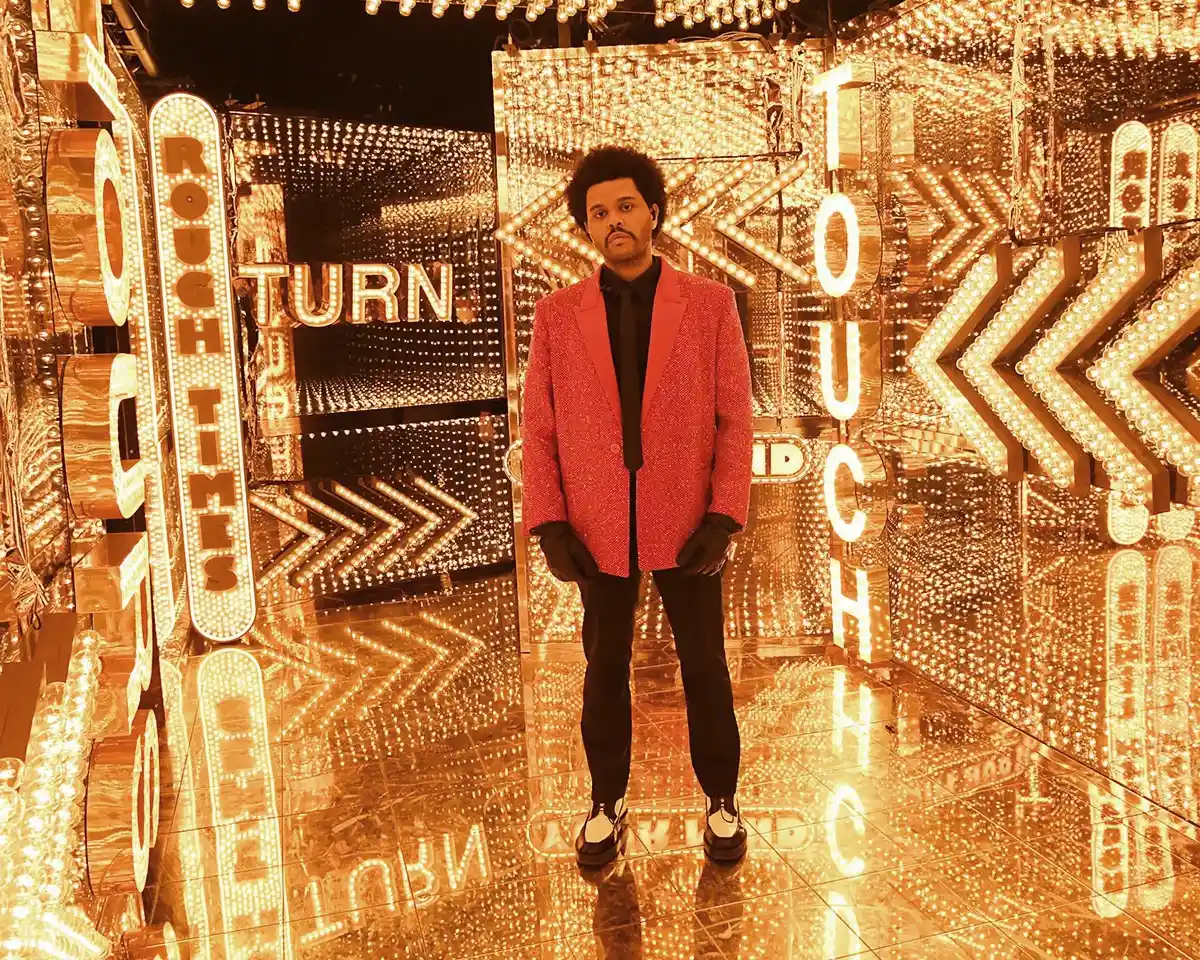
2021: The Weeknd
One thing is certain: The Weeknd knows how to pull an audience in. His performance was a bold statement on art and spectacle, drawing on visual cues from classic American cinema and forced-perspective camera illusions. It was immersive, surreal, and unmistakably his. Designed for easy consumption, the performance was a greater indication of what was to come. It was rife with political undertones, perhaps even the Weeknd’s own discontent with that year’s Grammys. His protest was the major reason for the audience to tune in, just waiting to see what would happen.
Ultimately, 2021 was the Super Bowl Halftime Show at its best: raw precision and an artist with a singular vision. That year, the NFL banked on talent and a controlled scandal. Kedrick Lamar’s 2025 performance had a similar impact.
Net Positive: The artist committed dollars to Ethiopian relief funds to combat world hunger, later establishing the XO Humanitarian Fund with the World Food Programme.
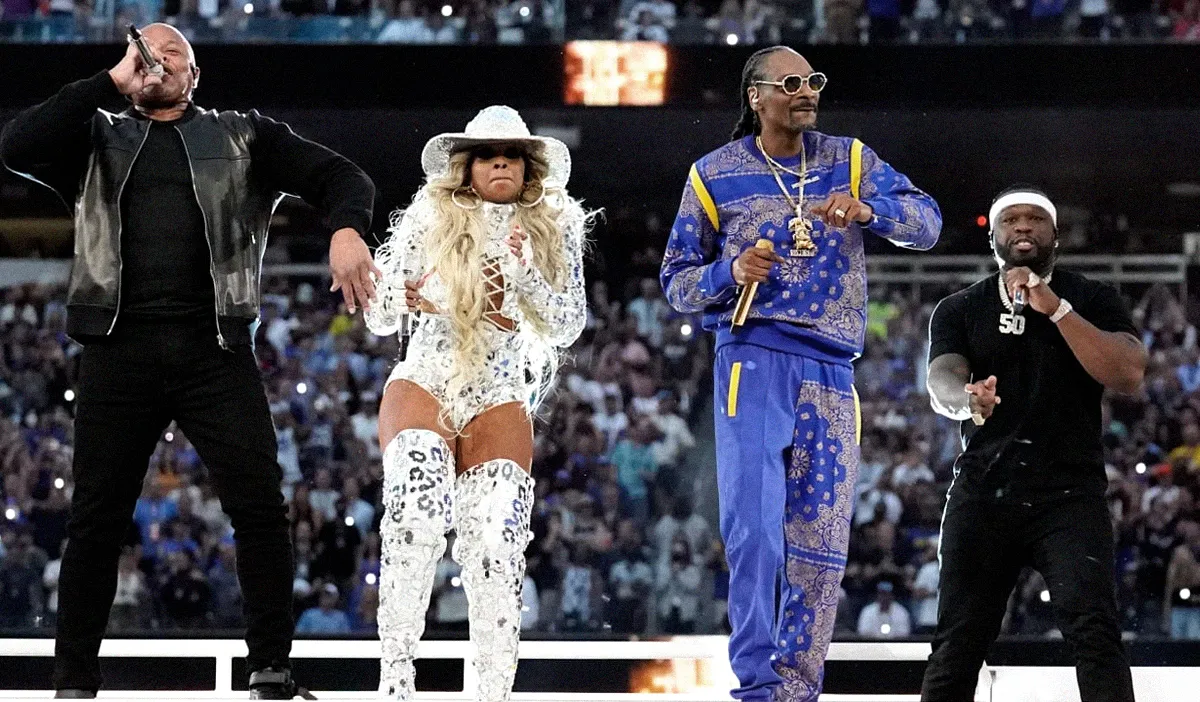
2022: Eminem, Dr. Dre, Snoop Dogg, Kendrick Lamar, and Mary J. Blige
West Coast represent. On a stark white stage recreation of Compton, we got the community 90s politicians worked hard to erase. This time around, there were more overt themes of Black culture. Then came quick change after quick change from a massive ensemble. Those 15 minutes were rooted in time even though its players were older, but their music clearly still resonated with the supporting characters some 20 years their junior. “Dre Day” was perfect.
Net Positive: Support for Snoop Dogg’s Football program and Eminem’s Marshall Mathers Foundation for at-risk youth in Detroit.
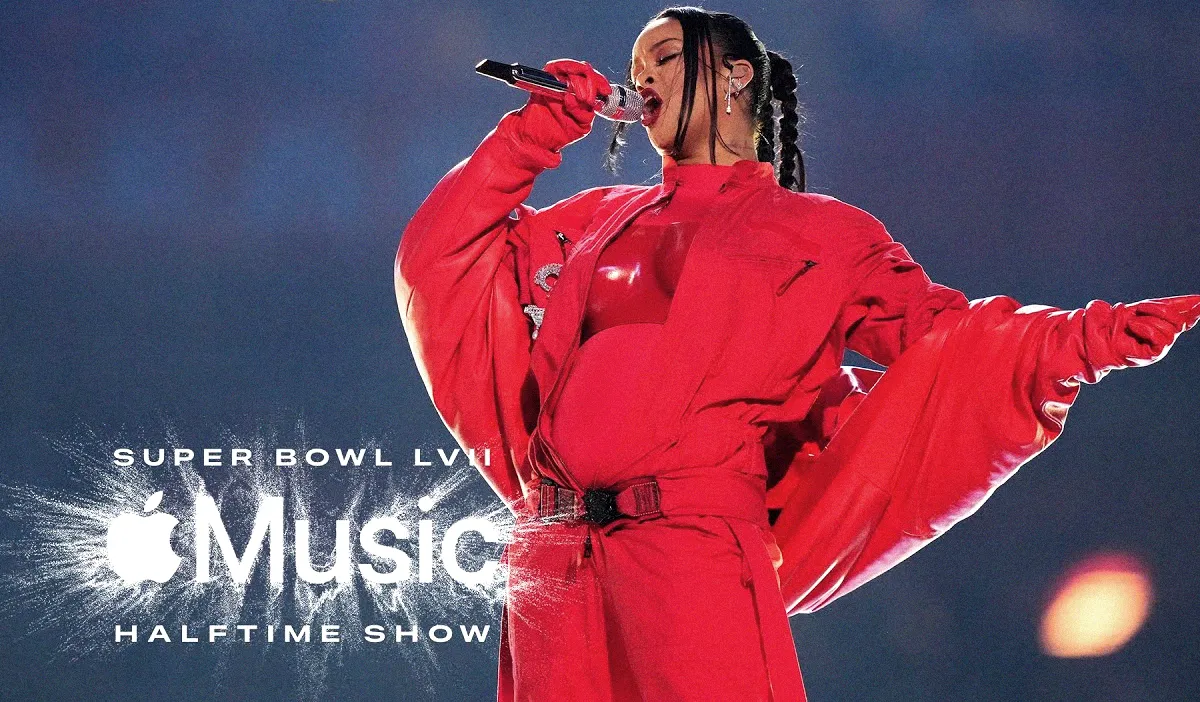
2023: Rihanna
The theme: was it womanhood? Not quite, the dancers were generally stripped of gender identifiers (Topical!). Was it about cashing a check? Rihanna honestly would do that—in the best way—but I have to say we got far more from her. I remember being shocked that Rihanna was up and down, and visibly pregnant. I’m still obsessed with her femme dancers exposing their own flat bellies making a T.I. face and the camera’s back on Rihanna. It’s motherhood, it’s cheek, and the overall polish of the whole set lent itself more directly to high art. Yet, you can’t forget about the product placement. Mid-show, she whipped out Fenty Beauty setting powder. It was femininity, it was power, it was badass. No special guests needed.
Net Positive: Rihanna’s Clara Lionel Foundation focuses on climate education, women’s entrepreneurship, the arts, healthcare, and education empowerment initiatives in the southern United States, the Caribbean, and East Africa.
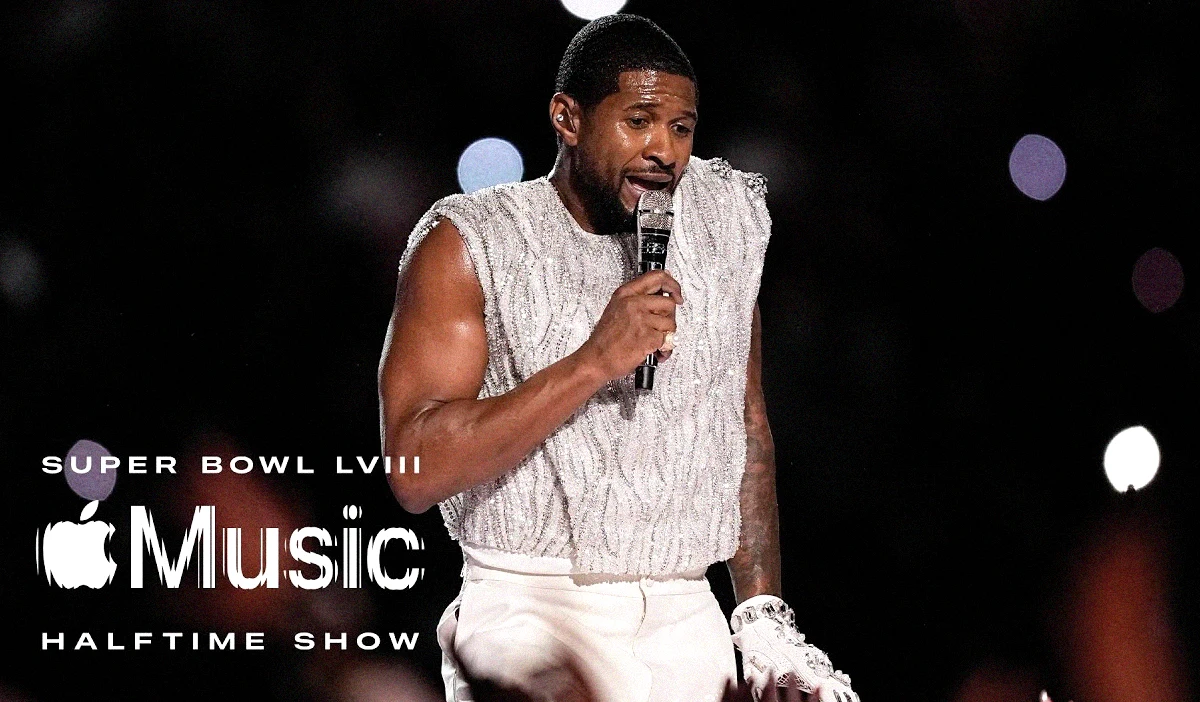
2024: Usher with special guests Alicia Keys, Jermain Dupri, H.E.R., will.i.am, Lil Jon, Ludacris
Usher’s instant athleticism was jaw-dropping. This, coupled with his MJ tribute was a return to the core of Super Bowl performance. It was a true stadium show, pyrotechnics and choreo that felt borderline excessive given all the moving parts.
Net Positive: The year the NFL gave LA $3 Million. Usher promoted his family foundation, distributing nearly a million dollars in grants.
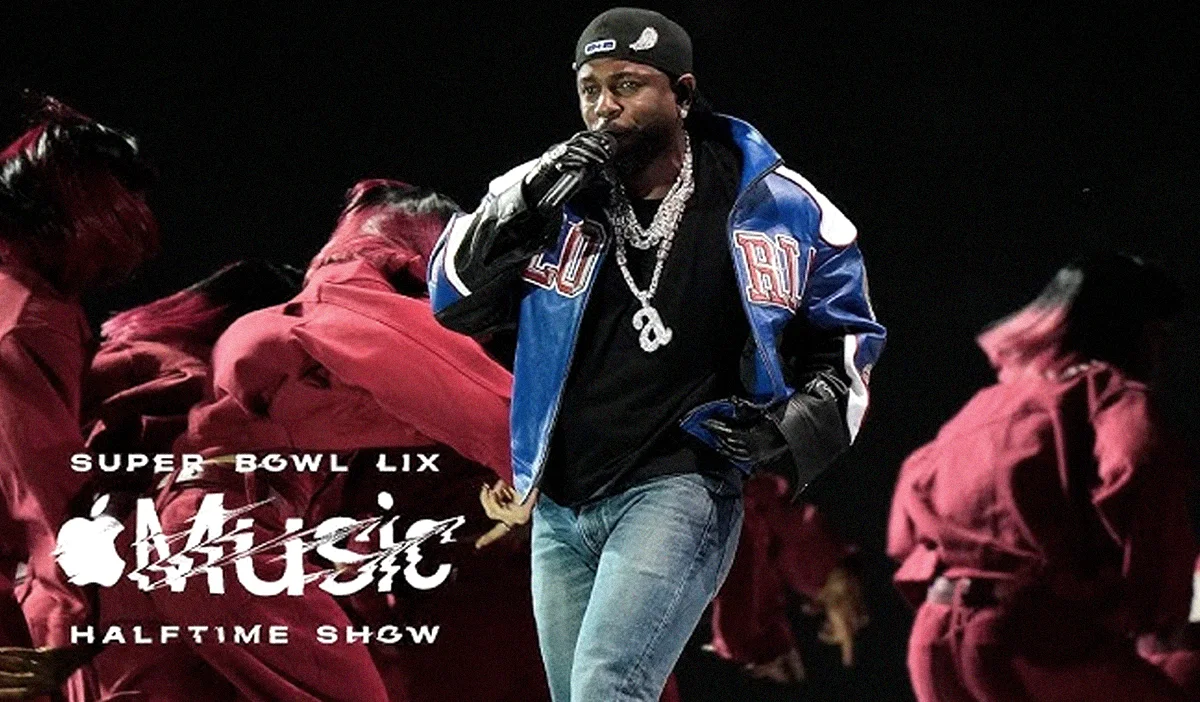
2025: Kendrick Lamar with special guest SZA
Set against an open-street, LA backdrop, the show delivered sharp, choreographed storytelling. We were met head-on with images bound to confront implied bias and visual shorthand. Kendrick avoided the camera until the final moments, when he addressed Drake directly. It was a rejection of spectacle and an insistence on message over mass appeal—roof that subversion can still happen on a billion-dollar broadcast.
Net Positive: Kendrick’s merch benefitted California wildfire victims via the American Red Cross. He publicly held a pedophile accountable and looked good while doing it. This show made me a fan.
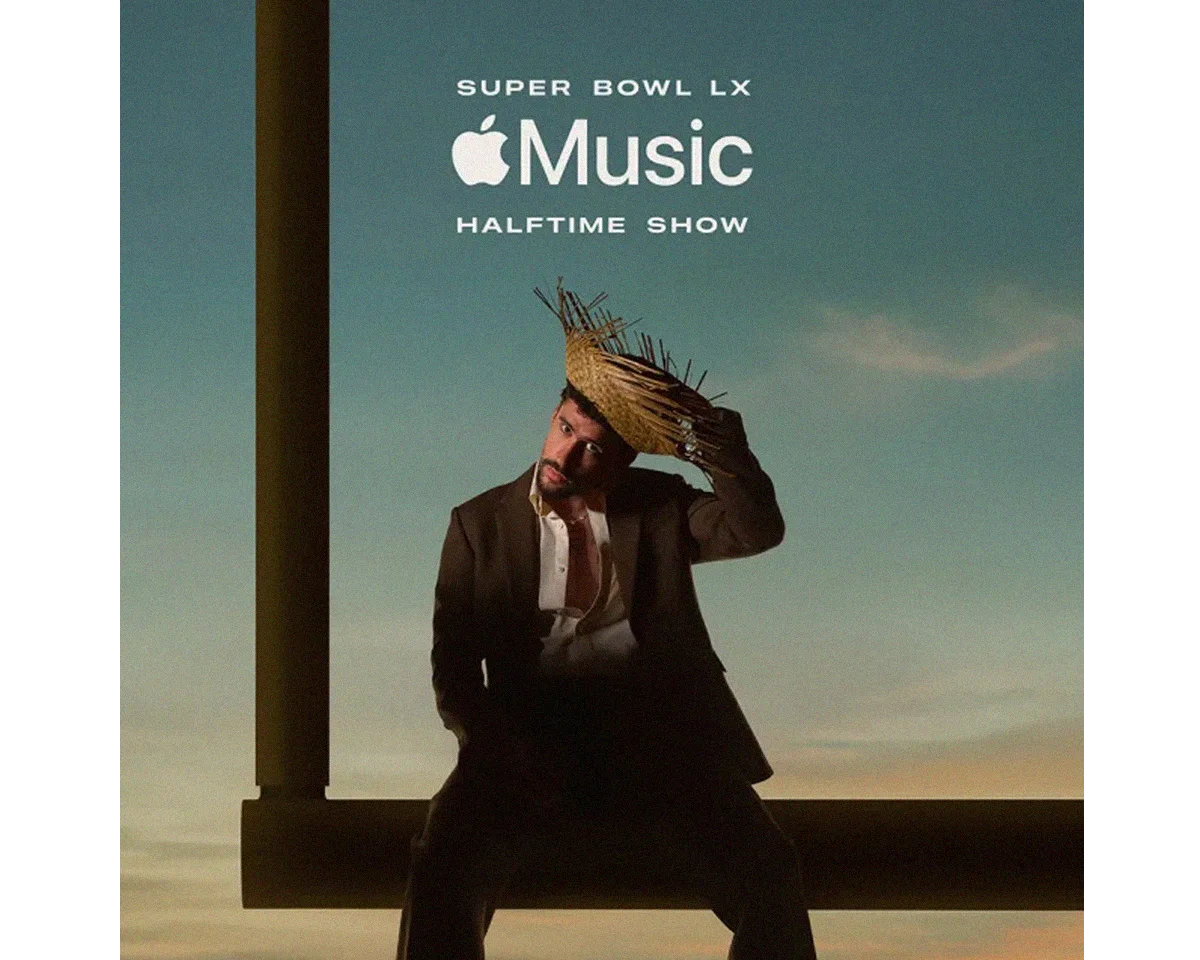
The Wrap Party: 2026 Bad Bunny
All four core tenants of Inspire Change have been covered in the halftime shows since 2019: race, gender, protest, and performance. Now, we're about to see Bad Bunny conquer the same pillars on perhaps the biggest stage field yet. I guarantee it. We’re coming together to eat, make merry, and celebrate the voices we should hear more of in this melting pot. And yes, there will be merch. Concha-shaped plushies repping every NFL team and human-sized hoodies to match. Because even revolution is televised and gets monetized.
Thanks folks, for tuning in—and let me drive the show home with this: In this new era of culture curation, Bad Bunny isn’t a risk, he’s the reward. The Super Bowl is still the most-watched mirror America holds to itself and his presence signals a future that’s plural, political, and unbothered by the old codes. Bad Bunny is not the exception to what’s been written. He’s the new rule.