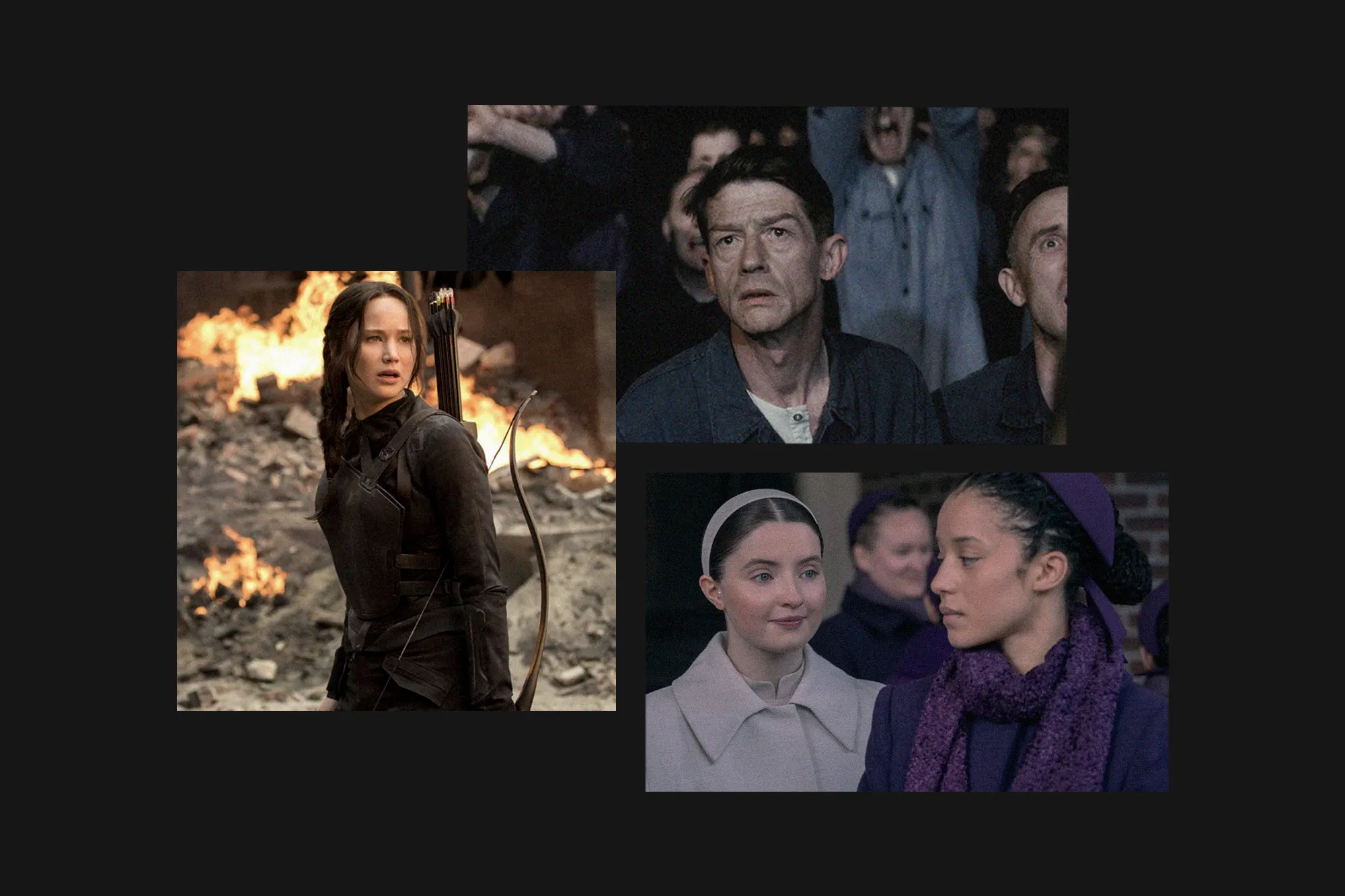
With Margaret Atwood’s The Testaments releasing on Hulu, I’ve been thinking about what our favorite dystopias are doing to our sense of the future. As a Spaniard living in the Netherlands, I’ve become acutely aware of the influence that society has over politics, but also the influence that politics can have over society. The rise of more and more extreme-right governments all over Europe has led many to believe that we must become accustomed to the idea of a new war every month, to the inevitable increase in the cost of living, and even to setbacks in essential rights for women and queer communities. This is nothing new. And I know I am not alone.
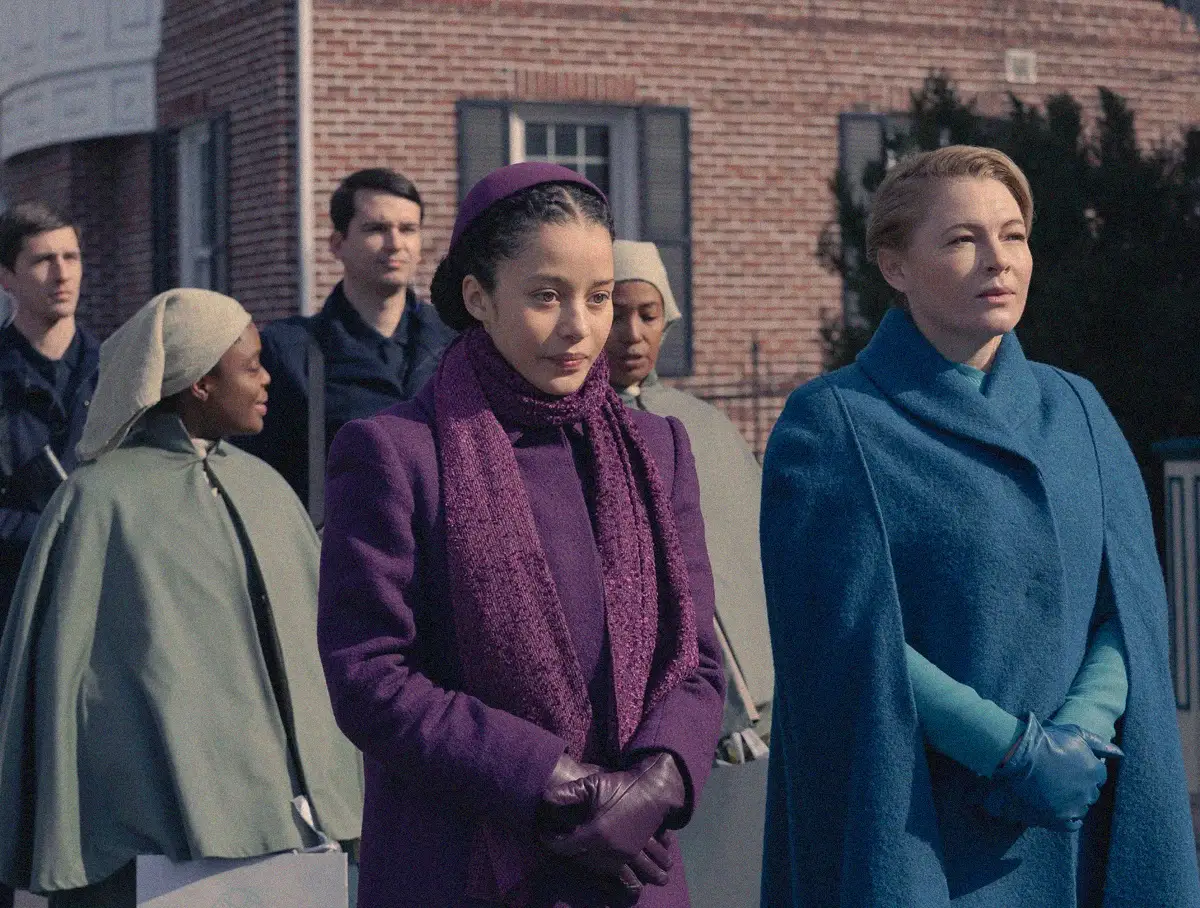
Across the world, from Venezuela to Tehran to the streets of Minneapolis, people recognize this polarization—they see how we seem to be approaching an imminent collapse of the system as we know it. And yet, we are disturbingly far from the political and activist awakenings our beloved but double-edged dystopian classics promise for us. Look around you. Where do you see the inner fire that leads Katniss to valiantly raise three fingers in The Hunger Games (2008), Winston to bravely hide his diary in 1984 (1949), or Offred’s to quietly say no in The Handmaid’s Tale (1985)? Do we really need a single heroic figure to save us, or do ordinary people still have what it takes to stand up together for what we believe in?
Because we have read “the worst,” because we have watched the Hollywoodized cinematic adaptations, we expect the absolute worst and not the slow burn that ultimately leads to the worst. This is the double-edged nature of these novels—and their continual adaptations. We think we know where to draw the line, when the reality is that the line is slowly moving without us even realizing it. In the world of 2026, you could easily argue whether The Hunger Games (2008), 1984 (1949), Brave New World (1931), or even the anti-totalitarian classic The Handmaid’s Tale (1985) still even qualify as Dystopias.
Critics have long heralded these novels as warning signs, yet the worlds they envisage seem to be inching closer to reality. Do we have these very cautionary tales to blame for distorting our judgment of real life? For tricking us into believing that doomsday is still centuries ahead? Just look at the headlines. “Can we still be shocked by Margaret Atwood’s Gilead?” “The Testaments, sequel to The Handmaid’s Tale, arrives with similarly eerie timing.” We need these stories, but they haven’t saved us, yet.
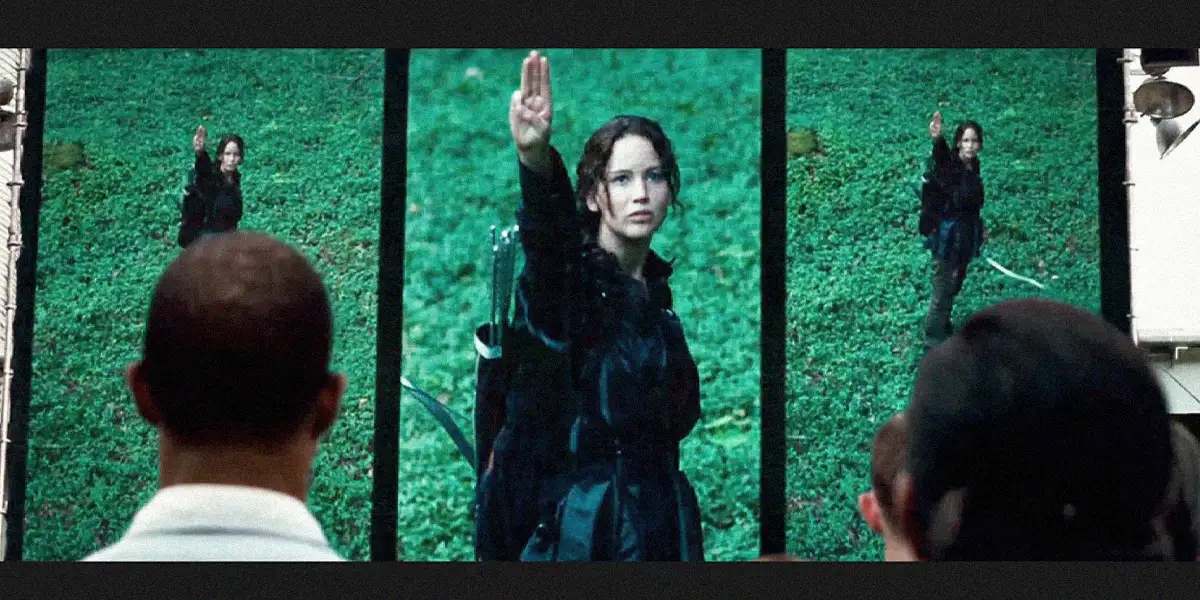
Hollywood’s crisis of original ideas aside, our cultural obsession with these authoritarian-regime-toppling stories of heroicism is a symptom of the hope we desperately crave. Isn’t it curious how The Hunger Games keeps getting cinematic adaptations almost 20 years after its first publication? Suzanne Collins’ dystopian view of the U.S. is a terrifying mirror to look at, but her resilient characters’ willingness to make sacrifices for the common good keeps us returning for more. When The Hunger Games: Sunrise on the Reaping releases this November, we’ll leave the theater, relieved at the typical plot of good triumphing over evil—but then we’ll go home, and its warning signs will slowly fade from our memories.
Written in the aftermath of WWII, George Orwell’s vision of the world in 1984 was clearly marked by what he witnessed and endured throughout both World Wars in Europe. The rise of dictatorial regimes, persecution of people based on their political ideas or ethnicity, and the war propaganda from all the countries involved in the conflict. The British writer’s imagination led him to think ahead of his time’s technology to see how everything he endured could be used as a tool for political propaganda and social control in a hypothetical near future.
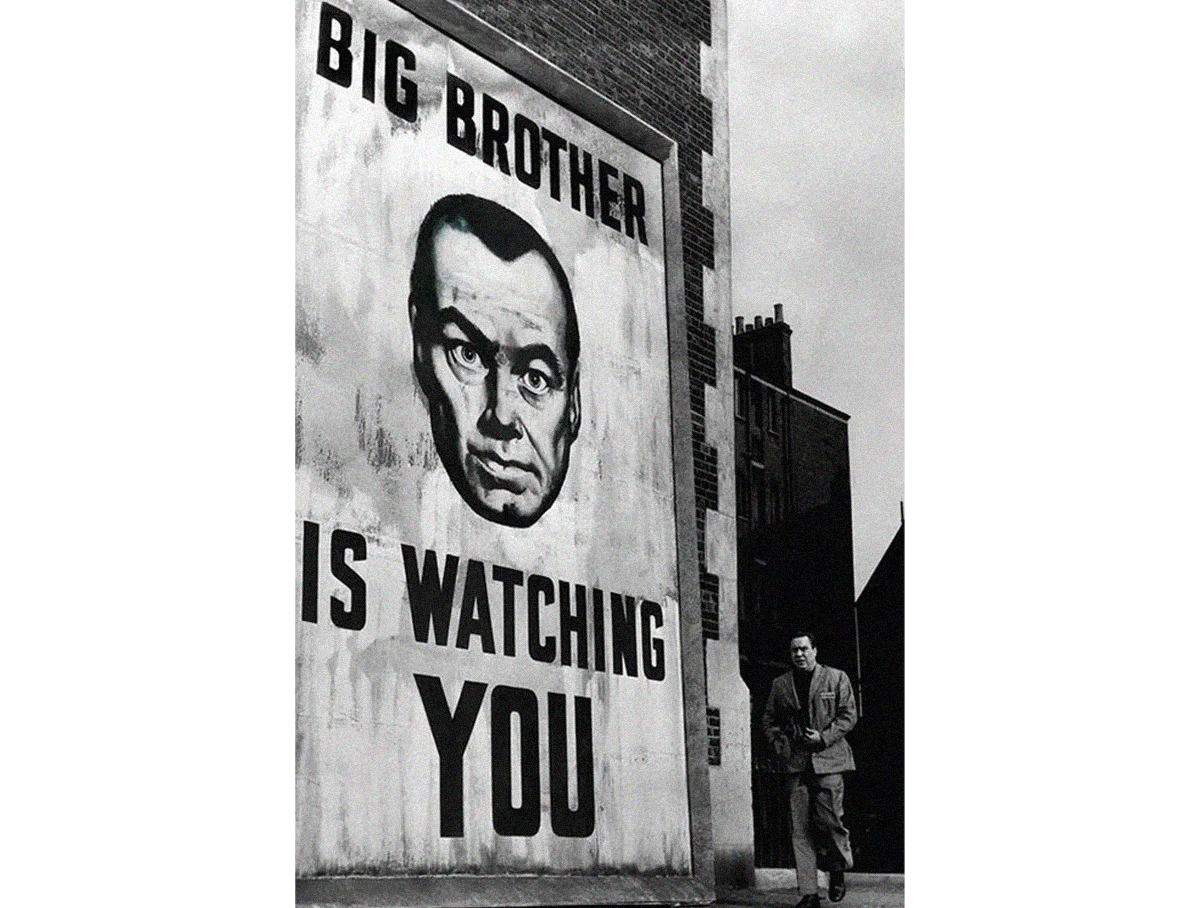
But we are not there yet, are we? Or so we like to think. 2016 was recognized internationally as the year of post-truth, a term often used in Orwell’s novel, marking a moment when objective facts become less influential in shaping public opinion, instead appealing to emotion and personal belief. Events such as the Brexit referendum in the UK and the US presidential election, both in 2016, marked the baseline of a succession of disturbed realities. And think of all that’s transpired on the geopolitical stage in the 10 years that have passed since.
Orwell didn’t predict ChatGPT or artificial intelligence, but he did foresee how these technologies could threaten our personal privacy and autonomy. And honestly, it is not like we are constantly being heard and observed by Big Brother. Or are we? Can you claim to own the right to complete privacy in our own private spaces? We all own a mobile phone, and we should know by now that they are listening. But what they are listening to is not good news either. Orwell’s tutor at Eton College was Aldous Huxley. He was the author of Brave New World, and he had a clear, yet pessimistic, view of the society of tomorrow. He foresaw a society completely dependent on a drug called “soma,” which would provide instant gratification and an easy escape from life’s unpleasantries. Sound familiar?
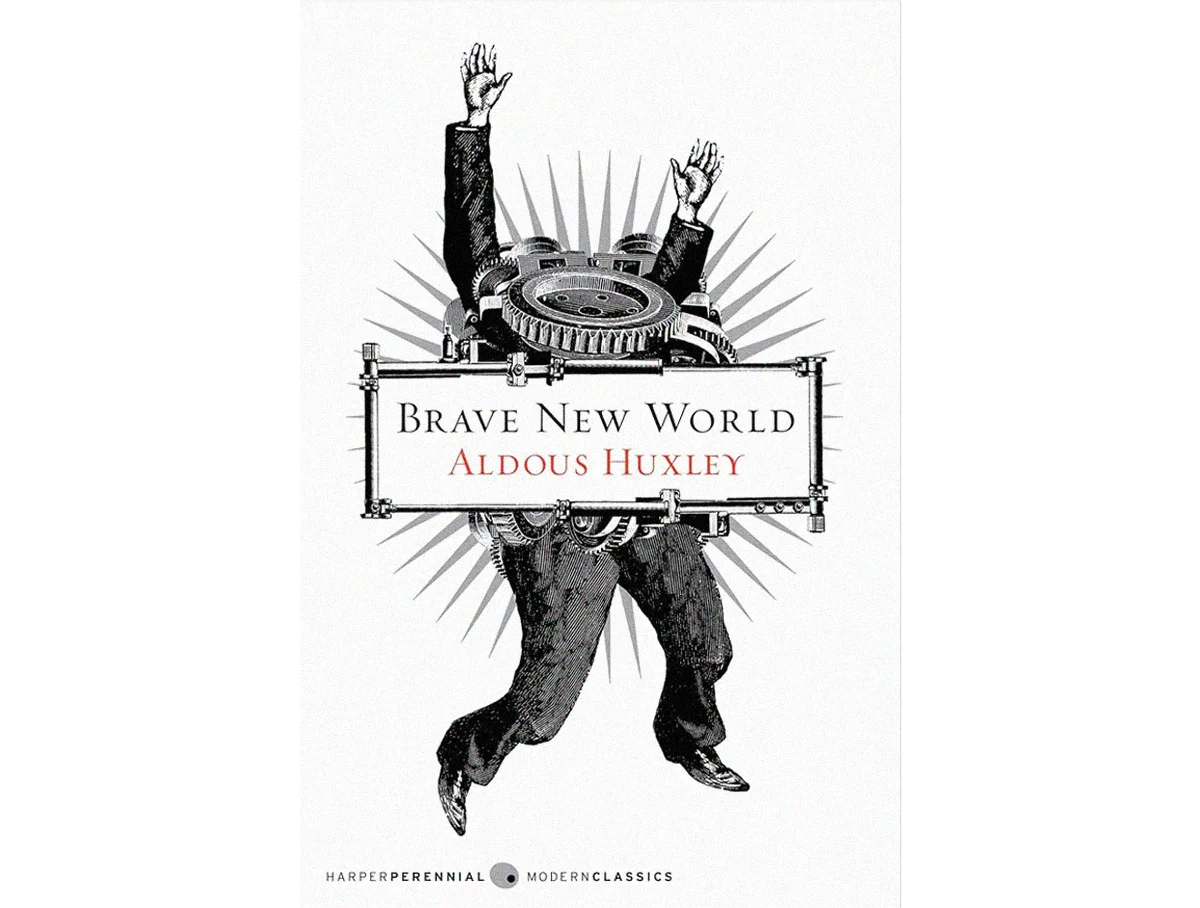
Alcohol, drugs, antidepressants, and even our cherished (yet despised) doomscrolling surface in my mind. Apps such as Tinder or Bumble are also part of the dehumanization of love and romantic relationships that Huxley explored in his novel. The British author portrayed love as a superficial phenomenon, based more on the convenience and artificial construct of one’s class. And yes, of course, everyone has fun swiping right. Swiping left. But if you stop to think about it, there is a superficial reason for your swipes that often has little to do with love and a lot to do with the artificial constructs we’ve been fed as a society. Are our desires even ours anymore?
And yes, Huxley foresaw this dehumanization too, describing a society that eradicated not only discomfort, but emotional experiences. Without discomfort, we can’t build resilience; without emotional connections, we feel isolated; with isolation comes easy manipulation and a lesser likelihood of pushing back against authoritarianism. And yet, we look around, and we think, “It could be worse, right?” In posing that question, we fall into a trap. Yes, it could be worse. But society will always wait for a dramatic breaking point until something really horrible happens—and that breaking point has already come.
Think about WWII and how clearly we see all the mistakes that led to that disaster. How could they allow that to happen? Maybe they, too, thought the worst was yet to come. And if you think about it, our ancestors are allowed to be naive, as all of these Dystopian novels are rooted in the trauma of these historical events. They didn’t have these “guidelines,” but we do. A few years ago, unthinkable cases like the Epstein files would have been relegated to mere fiction. The right to abortion would not have been a matter of discussion. And let’s not talk about arrested and deceased civilians in demonstrations and protests all around the world.
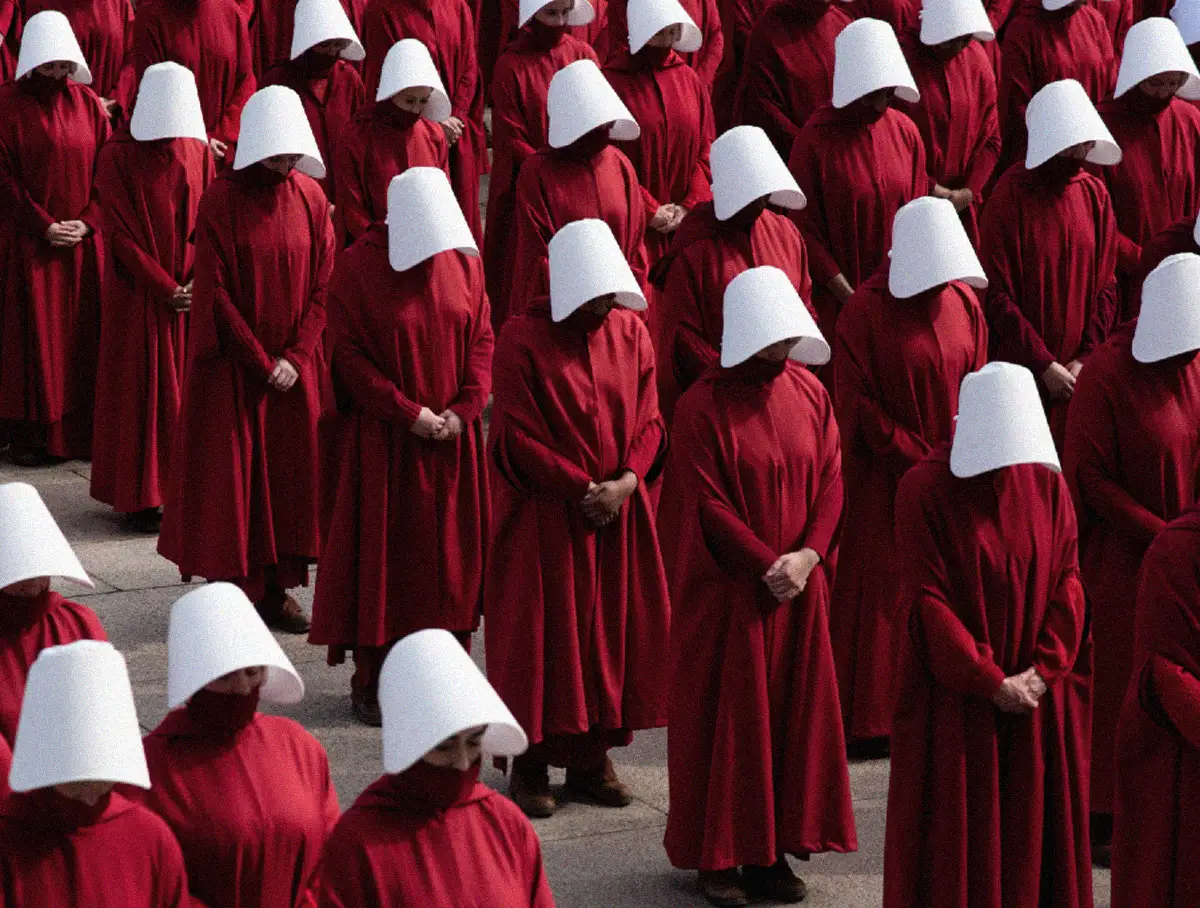
Margaret Atwood’s The Handmaid’s Tale is the most recent of the Dystopian novels we now consider classics, published only one year after Orwell’s envisioned future. She wrote it with countless earlier dystopias behind her—1984, Brave New World, and more—but also with the benefit of having seen echoes of their imagined horrors in real historical events and political shifts during her own lifetime. Indeed, Atwood’s work is perhaps the only of the aforementioned novels that provides a small window into the events that lead up to the creation of the novel’s totalitarian and theocratic regime—in her case, Gilead. Freezing women’s bank accounts, forbidding women to read or write and making it illegal for them to even work. Things that didn’t happen overnight, but as a chain of events that slowly left women completely vulnerable to the repression that would come later with Gilead.
The double-edged nature of Dystopian novels is precisely that, as a society, we are expecting the worst, while enough bad things are already taking place. Atwood captured this eerie truth through one of her most complex and interesting characters, Aunt Lydia: “Ordinary is what you are used to. This may not seem ordinary to you now, but after a time, it will. It will become ordinary.” Let’s focus on the hints that these authors gifted us when the moment didn’t seem that bad, until it was.