“Mrs. Dalloway said she would buy the flowers herself.” The famous opening line of Mrs. Dalloway by Virgina Woolf reminds us that florals have always been more than décor—they’re narrative devices. From the roses Jo March tucks into her novels in Little Women to the symbolic blooms scattered across contemporary fiction, flowers help shape the stories we tell, especially around the table. And there’s no table more primed for storytelling than a Thanksgiving one.
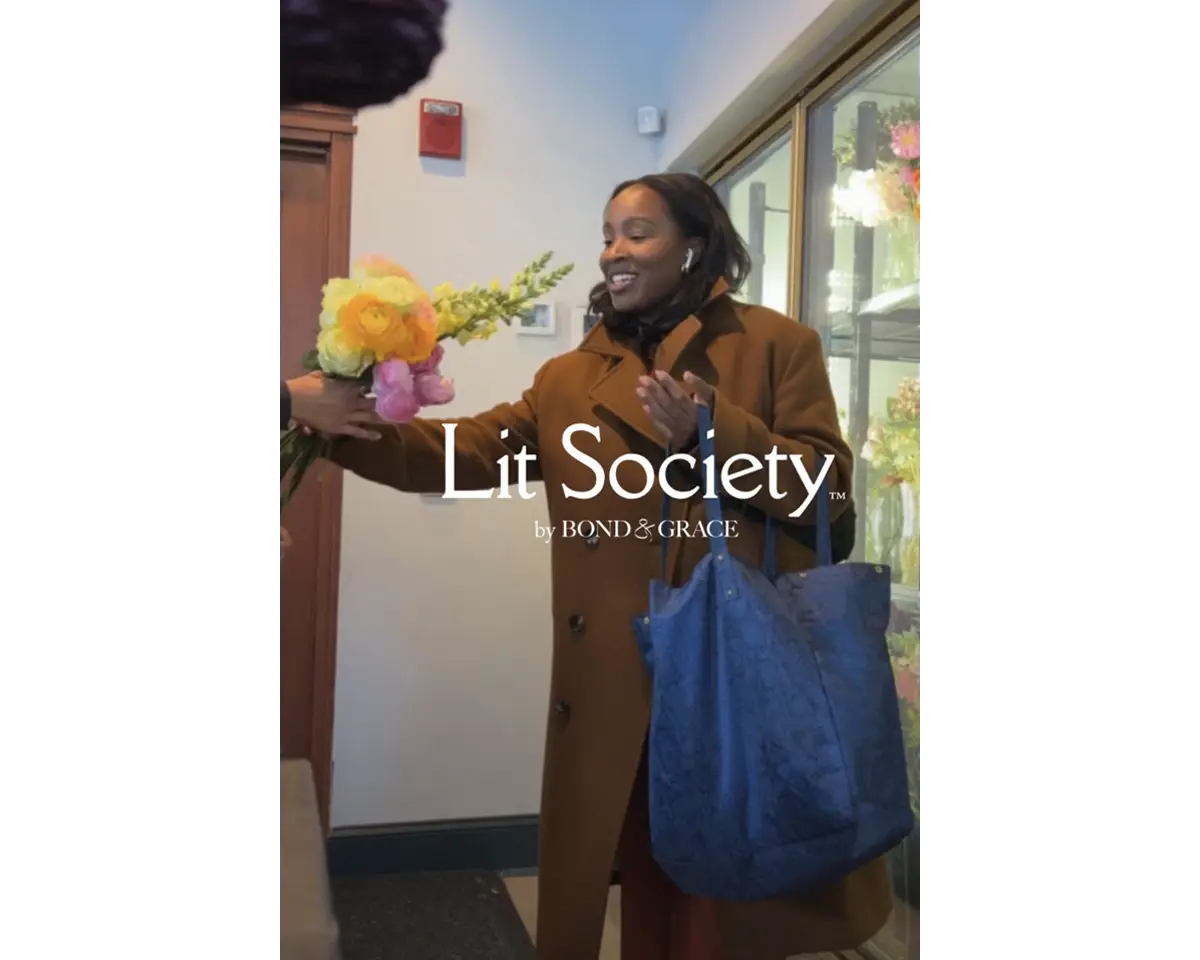
Our Chief Product Officer Ayana Christie recently sat down with internationally recognized florist and educator Jenny Ingrum of Dr. Delphinum for a Lit Society conversation on the craft of floral arranging. As Jenny put it, “I’m attracted to art that arrests you—literally stops you in your tracks. It’s the kind you can’t move past; you just have to figure out why it’s so beautiful.”
At Thanksgiving, florals do more than sit in the center—they set a scene. They can echo a family’s history, introduce a theme for the evening’s conversation, or subtly influence the emotional architecture of a gathering. What story do you want your guests to walk into?
Ayana and Jenny invited Lit Society members to “soft-launch their inner florist,” blending practical design know-how with the idea that your Thanksgiving table can tell a story. If you missed the conversation, worry not—we’ve distilled 23 lessons from Jenny below to help you craft an arrangement that doesn’t just look beautiful, but invites guests to reflect, enjoy, and embrace a meal shared together.
23 Lessons in the Language of Flowers
I. The Preface: Begin with Intention
- Clean your vessel. Begin with a blank page—a spotless vase and room-temperature water.
- Feed your flowers. Use store-bought flower food, or DIY with a pinch of sugar and lemon juice.
- Change the water daily. Editing matters. Return to your arrangement often; refresh it like a draft in progress.
II. Hydrangea 101
- Revive wilted blooms by soaking them head-down in water—a reminder that themes can return even after collapsing.
- Cut an inch up the stem to expose more surface area for absorption. (Revision, again.)
- Remove all foliage. Let the essential ideas speak for themselves.

III. On Composition
- Start low and compact. Ground your narrative before reaching for the grand.
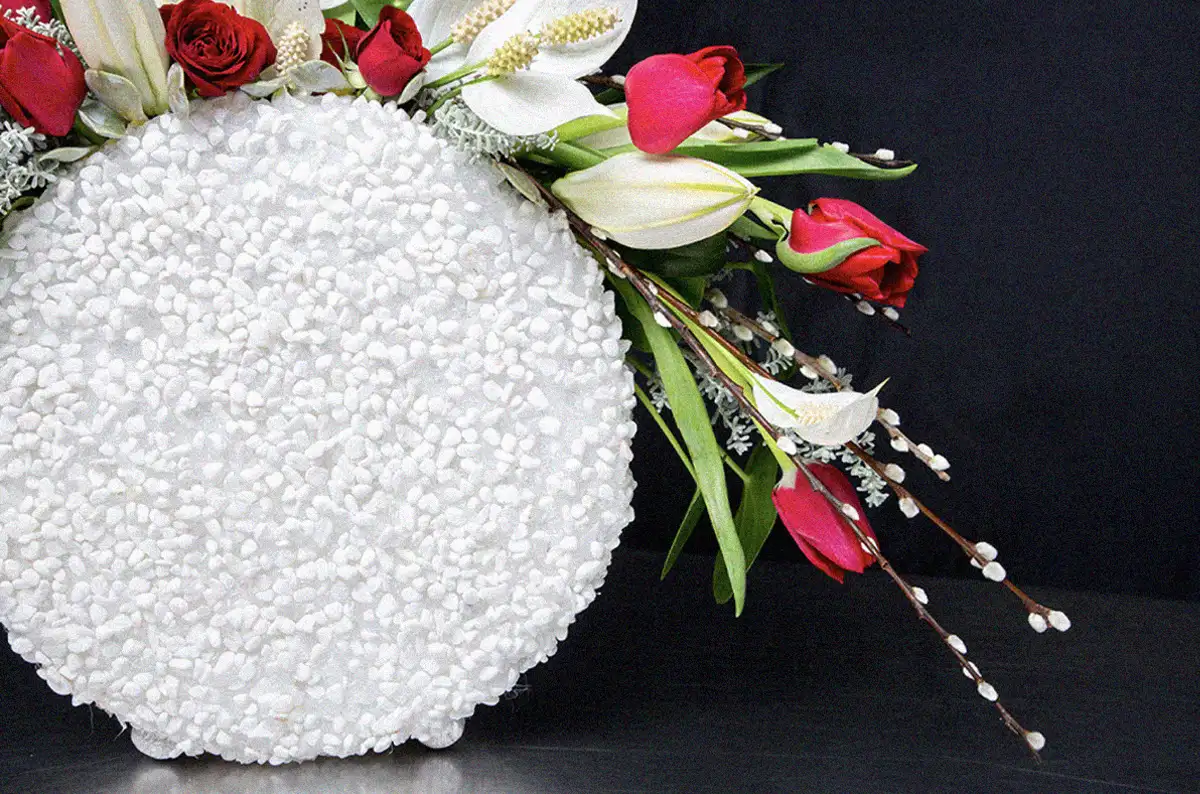
- Use angles. Tension and asymmetry make things interesting
- Measure from wrist to elbow for balance—trust your body’s innate geometry.
- Group in threes or triangles. Visual rhythm matters as much as syntax.
- Choose color with intention. A palette sets tone; mood is its own kind of plot.
- Arrange for perspective: coffee table (intimate), credenza (moderate), island (expansive)—or, for Thanksgiving, consider the eye-level of seated guests.
- Keep proportion. The bouquet should complement the vase, not compete with it.
- Edit like a bonsai. Trim what distracts once the story reveals itself.
IV. On Longevity
- Separate dying stems. Old drafts can cloud the clarity of the new.
- Avoid direct sun or vents. Protect your work from burnout.
- When changing water, remove the whole arrangement—don’t cut corners.
- Give stems a fresh cut every few days to “reopen” them; attention revives everything.
- Refrigerate overnight. Rest extends life—of flowers, of scenes, of ideas.
V. A Stylist’s Philosophy
- Go monobotanical. Simplicity can be striking—one motif explored deeply.
- Reflex your roses. Peel back the outer layers; vulnerability creates fullness.
- Embrace imperfection. A bent ranunculus or uneven bloom adds character—the human edit.
- Follow your intuition. Every stem, like every story, will tell you what it needs if you slow down enough to listen.